About This Lesson
Sources of farm power are the different sources of energy used to carry out farming activities. Farmers need power for operations such as clearing land, ploughing, planting, weeding, transporting materials, pumping water and harvesting crops. The source of power used often depends on the size of the farm, the type of operation, the availability of equipment and the farmer’s resources.
Farm power may come from people, animals, machines and natural energy sources. Understanding these sources helps students know how different farming operations are carried out and why some farms depend mainly on manual labour while others use animals, machines or renewable energy.
Learning Objectives
At the end of this lesson, you should be able to:
- explain the meaning of farm power;
- identify the major sources of farm power;
- give examples of each source;
- state the uses of different sources of farm power;
- explain the advantages and limitations of each source;
- compare human, animal, mechanical and renewable farm power.
What Is Farm Power?
Farm power is the energy or force used to carry out agricultural operations. It makes it possible to perform different tasks on the farm, from simple activities such as planting seeds and weeding to larger operations such as ploughing, harvesting and transporting farm produce.
The amount and type of power required depends on the operation. For example, a farmer may use human power to plant seeds or remove weeds on a small farm, while a tractor may be used to prepare a large area of land. In some farming communities, animals are used to pull implements, while solar energy may be used to operate water pumps.
Main Sources of Farm Power
The main sources discussed in agricultural science include human power, animal power, mechanical power and renewable power. Each source has different applications and limitations.
1. Human Power
Human power is the energy supplied by people to perform farm operations. It is one of the oldest sources of farm power and remains important, particularly on small farms where the use of large machines may not be practical.
Farmers use human power when handling simple farm tools such as hoes, cutlasses, spades, shovels and sickles. It is commonly used for clearing small areas, planting, weeding, harvesting, sorting produce and carrying farm materials.
One major advantage of human power is that it does not require the purchase of fuel or expensive machinery. However, human labour can be slow and tiring, especially when large areas of land are involved. The amount of work that can be done also depends on the number of workers and the physical effort required.
Examples: Farmers, farm labourers and other people carrying out farm operations.
Common uses:
- Planting seeds
- Weeding
- Harvesting
- Clearing small areas
- Carrying farm materials
- Sorting and processing farm produce
2. Animal Power
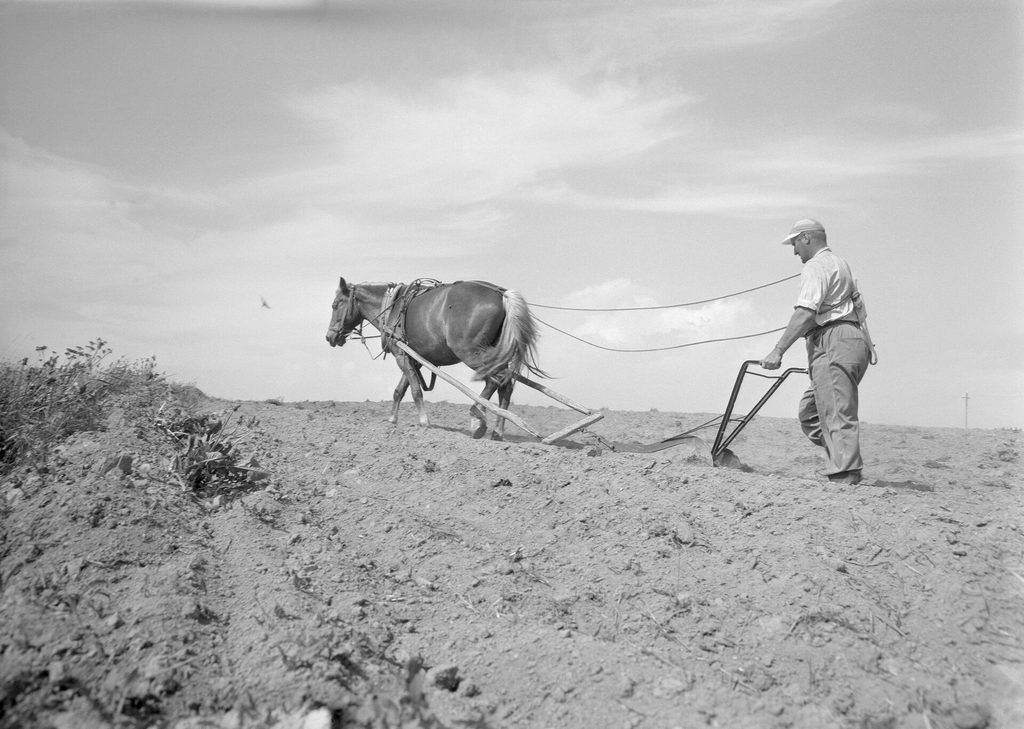
Animal power involves using trained farm animals to provide the force needed for agricultural work. Animals have been used in farming for many centuries and are still useful in areas where machinery is expensive or difficult to obtain.
Animals such as oxen, donkeys, horses and camels may be used for pulling ploughs, carts and other farm equipment. Their strength allows them to perform work that may be difficult or slower for a person to do alone.
Animal power can be useful for ploughing, transportation and other operations involving pulling or carrying loads. However, farm animals require adequate food, water, shelter, healthcare and training. They can also become tired or ill, which may affect farm operations.
Examples: Oxen, donkeys, horses and camels.
Common uses:
- Ploughing
- Pulling farm implements
- Transporting farm produce
- Carrying farm materials
- Drawing carts and other equipment
3. Mechanical Power
Mechanical power is the energy supplied by machines and engines used to perform farm operations. It is particularly important in commercial and large-scale farming because machines can complete many operations over large areas in less time than manual labour.
Tractors are among the most common sources of mechanical power on farms. Other examples include harvesters, planters, irrigation pumps and engine-powered equipment. Machines may be used for land preparation, planting, spraying, harvesting and transportation.
Mechanical power can greatly reduce the physical effort required from farmers and increase the amount of work that can be completed within a given period. However, machinery can be expensive to purchase, fuel and maintain. Operators may also need appropriate training to use the equipment safely and effectively.
Examples: Tractors, harvesters, planters, irrigation pumps and other farm machines.
Common uses:
- Ploughing
- Harrowing
- Planting
- Spraying
- Harvesting
- Pumping irrigation water
- Transportation
4. Renewable Power
Renewable farm power comes from natural energy sources that can be replenished. Solar and wind energy are examples that can be used for different farm activities.
Solar energy can be converted into electricity using solar panels. On farms, this electricity may be used to operate water pumps, power lighting systems or support other equipment. Solar energy can also be used in crop and produce drying systems.
Wind energy can also provide useful power, particularly through wind-powered systems for pumping water or generating electricity. The usefulness of wind power depends on local wind conditions and the type of equipment available.
Renewable energy can reduce dependence on fuels such as petrol and diesel. However, some renewable systems have a high initial installation cost, and their performance may depend on environmental conditions and the equipment being used.
Examples: Solar panels and wind-powered systems.
Common uses:
- Pumping water
- Generating electricity
- Drying agricultural produce
- Powering some farm equipment
Comparison of the Main Sources of Farm Power
| Source | Examples | Common Uses |
|---|---|---|
| Human power | Farmers, labourers | Planting, weeding, harvesting |
| Animal power | Oxen, donkeys, horses | Ploughing, pulling and transportation |
| Mechanical power | Tractors, harvesters, pumps | Land preparation, planting, harvesting |
| Renewable power | Solar panels, wind systems | Water pumping, drying and electricity |
Importance of Farm Power
Farm power is important because agricultural work requires energy to complete many operations efficiently. Without an appropriate source of power, some farming activities would require much more time and physical effort.
One important benefit is that farm power reduces the time needed for farm operations. For example, a tractor can prepare a large area of land much faster than a farmer working with a simple hand tool.
Farm power also reduces physical stress. Human labour remains important, but machines and animals can provide additional force for demanding operations such as ploughing, transporting loads and harvesting.
Another important role is that farm power helps farmers increase the amount of work they can complete. This is particularly useful when there is a large area of land to cultivate or when an operation must be completed within a limited period.
Farm power also supports large-scale and commercial agriculture. Modern farms may use tractors, planters, irrigation equipment and harvesters to carry out operations that would be difficult to perform manually over large areas.
It can also support timely farming operations. Planting, weeding and harvesting often need to be done at suitable times. Having an appropriate source of power can help farmers complete these activities within the required period.
Advantages and Limitations of Different Sources of Farm Power
The advantages and limitations of farm power depend on the source being used.
Human power
- It is readily available in many farming communities.
- It can be used with simple and inexpensive tools.
- It is suitable for small-scale and delicate farm operations.
- It is tiring and relatively slow.
- It is not suitable for many large-scale operations.
Animal power
- Animals can provide more pulling force than a person.
- They can be useful where tractors and other machines are unavailable.
- They can be used for transportation and ploughing.
- Animals require feeding, shelter and healthcare.
- They can become tired or sick and require proper handling.
Mechanical power
- Machines can perform many operations quickly.
- They reduce the amount of physical labour required.
- They are suitable for large areas of farmland.
- Machines and spare parts can be expensive.
- Fuel, repairs and maintenance can add to operating costs.
- Operators may require training.
Renewable power
- It can reduce dependence on fossil fuels.
- Solar and wind energy are naturally replenished.
- It can be useful for water pumping and electricity generation.
- Some systems have high installation costs.
- Availability and performance can depend on sunlight, wind and other conditions.
Factors to Consider When Choosing a Source of Farm Power
Farmers should not choose a source of power simply because it is powerful or modern. The most suitable choice depends on the conditions of the farm.
Size of the farm: A small farm may rely more on human or animal power, while a large farm may require mechanical power for some operations.
Type of operation: Different activities require different amounts of power. Planting by hand requires much less power than ploughing a large field.
Cost: Farmers need to consider the cost of purchasing, hiring, operating and maintaining equipment or animals.
Availability: A source of power should be reasonably available in the farming area. Spare parts, fuel, animal feed or technical support may also need to be considered.
Nature of the land: Soil type, terrain and field conditions can affect the suitability of machines or animals.
Skill required: Some machines require trained operators, while simpler operations can be performed with basic tools and experience.
Farm size and production system: The needs of a small subsistence farm may be different from those of a large commercial farm.
Farm Power and Farm Mechanisation
Farm power and farm mechanisation are closely related, but they do not mean exactly the same thing.
Farm power refers to the energy or force used to perform farm operations. It may come from people, animals, machines or renewable energy sources.
Farm mechanisation refers more specifically to the use of machinery and mechanical equipment to perform or assist with agricultural operations.
For example, a farmer using an ox to pull a plough is using animal power, while a farmer using a tractor and plough is using mechanical power as part of farm mechanisation.
Summary
Farm power is the energy or force used to perform agricultural operations. It is needed for activities such as land preparation, planting, weeding, transportation, irrigation and harvesting.
The major sources discussed in this lesson are human power, animal power, mechanical power and renewable power. Human power is supplied by people, animal power comes from trained farm animals, mechanical power comes from machines and engines, while renewable power can come from sources such as sunlight and wind.
Each source has advantages and limitations. The most suitable source depends on factors such as farm size, type of operation, cost, availability, terrain and the skills of the farmer. Using suitable farm power can reduce physical effort, save time and help farmers carry out agricultural operations more effectively.
Revision Questions
- What is farm power?
- Explain four major sources of farm power and give two examples of each.
- State four uses of mechanical power in agriculture.
- Mention three advantages and three limitations of animal power.
- Differentiate between farm power and farm mechanisation.
Frequently Asked Questions
1. What is farm power?
Farm power is the energy or force used to carry out agricultural operations such as planting, ploughing, transportation and harvesting.
2. What are the main sources of farm power?
The main sources discussed are human power, animal power, mechanical power and renewable power.
3. What are examples of animal power?
Examples include oxen, donkeys, horses and camels.
4. What is mechanical power used for on the farm?
Mechanical power is used for operations such as ploughing, harrowing, planting, spraying, harvesting, irrigation and transportation.
5. How is renewable power used in agriculture?
Renewable power from sources such as sunlight and wind can be used for activities such as water pumping, drying agricultural produce and generating electricity.
Related Articles