About This Lesson
Farm mechanisation is the use of machines, equipment and powered technology to carry out agricultural activities that may otherwise require a large amount of manual labour. It covers different stages of farming, including land preparation, planting, crop care, harvesting, transportation and processing.
In traditional farming, many operations are performed with simple tools such as hoes, cutlasses and spades. Mechanisation allows farmers to use equipment such as tractors, planters, harvesters, irrigation equipment and processing machines to complete suitable tasks more quickly and efficiently. The level of mechanisation used depends on factors such as farm size, type of crop, available resources, terrain and access to machinery.
Learning Objectives
By the end of this lesson, you should be able to:
- define farm mechanisation;
- explain the major levels of farm mechanisation;
- state the advantages and disadvantages of mechanisation;
- explain the importance of mechanisation in agriculture;
- identify common farm machinery and their uses;
- describe some challenges affecting farm mechanisation; and
- suggest ways of improving access to farm machinery.
What Is Farm Mechanisation?
Farm mechanisation is the use of machines and mechanical equipment to perform agricultural operations. It does not necessarily mean that every farming activity must be done by a machine. Instead, machinery is introduced where it can perform a task effectively, reduce excessive manual labour or improve the speed and efficiency of an operation.
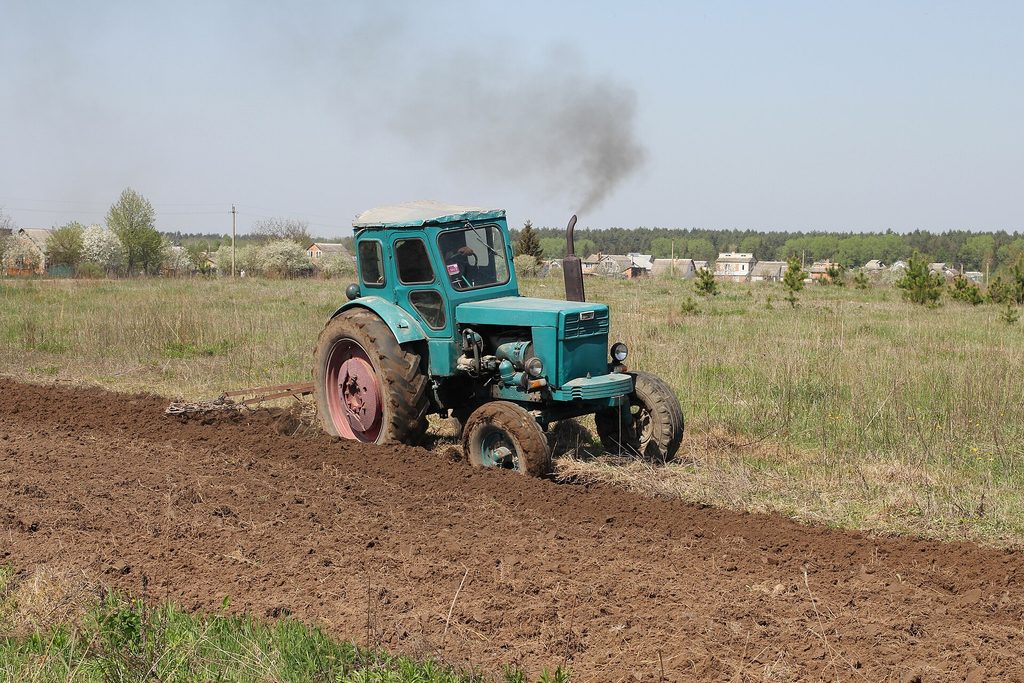
For example, a farmer may use a tractor and suitable implements for land preparation instead of relying entirely on a hoe. A planter may be used to place seeds at appropriate intervals, while a harvester can reduce the time required to harvest a large area.
Farm mechanisation can therefore range from relatively simple equipment to highly advanced machinery and automated systems. The most suitable level depends on the needs and circumstances of the farm.
Types or Levels of Farm Mechanisation
The level of mechanisation can be described as simple, intermediate or advanced, although the exact classification may differ between agricultural systems and textbooks.
1. Simple Mechanisation
Simple mechanisation involves basic machines or equipment that assist farmers while still requiring considerable human involvement.
Examples include small water pumps, simple processing equipment and some manually operated or small-powered agricultural machines. This level can be useful where farms are relatively small and farmers have limited access to expensive machinery.
2. Intermediate Mechanisation
Intermediate mechanisation involves more powerful agricultural machines that perform major farm operations and reduce the amount of manual labour required.
Examples include tractors with suitable implements, mechanical planters, cultivators and some harvesting equipment. Such machinery can allow farmers to cover larger areas within a shorter period.
3. Advanced Mechanisation
Advanced mechanisation involves highly developed machinery, automated systems and technologies that can perform complex agricultural operations with limited direct human effort.
Examples may include large combine harvesters, automated irrigation systems, precision-guided equipment and other computer-assisted agricultural technologies. These systems are more commonly associated with highly mechanised commercial farming, although access varies between regions and farms.
Advantages of Farm Mechanisation
Farm mechanisation provides several benefits when machinery is properly selected and used.
It saves time. Machines can complete many large-scale operations much faster than manual labour. This is particularly useful during time-sensitive activities such as land preparation and harvesting.
It reduces physical labour. Heavy agricultural work can place considerable physical demands on workers. Machinery can perform some of these tasks and reduce the amount of strenuous manual work required.
It increases the area that can be cultivated. A farmer using appropriate machinery can potentially prepare and manage a larger area than would be practical using only hand tools.
It improves efficiency. Some machines are designed to perform operations with greater consistency, such as placing seeds at regular intervals or harvesting crops efficiently.
It can increase agricultural output. When machinery allows farmers to complete operations on time and manage larger areas effectively, overall production may increase.
It supports timely farm operations. Delays in planting, weeding or harvesting can affect agricultural production. Mechanisation can help farmers complete important operations within suitable periods.
It supports agricultural development. The use of machinery encourages the adoption of improved farming methods and technologies.
Disadvantages of Farm Mechanisation
Despite its benefits, mechanisation also has limitations.
High initial cost: Tractors, harvesters and other large machines can be expensive to purchase. Small-scale farmers may therefore have difficulty owning them.
Maintenance costs: Machinery requires regular servicing, repairs and replacement of worn parts. These costs can become significant when equipment is heavily used.
Need for skilled operators: Some machines require proper training to operate safely and efficiently. Lack of trained operators can reduce the benefits of mechanisation.
Possible loss of some manual jobs: When machines replace certain labour-intensive operations, fewer workers may be needed for those particular tasks. At the same time, mechanisation can create other jobs in areas such as machine operation, repair and maintenance.
Soil compaction: Heavy machinery can compact soil when used under unsuitable conditions or repeatedly on the same areas. Soil compaction can affect soil structure and root growth.
Fuel and power requirements: Many agricultural machines depend on fuel or other energy sources, creating additional operating costs.
Limited suitability on some farms: Very small, steep, rocky or irregularly shaped fields may be difficult to work with certain large machines.
Importance of Farm Mechanisation in Agriculture
Farm mechanisation is important because it helps farmers carry out agricultural operations more efficiently. It can be used during land preparation, planting, crop management, harvesting, transportation and processing.
One major importance is the reduction of excessive manual labour. Tasks that would require many workers or several days of strenuous work can sometimes be completed more quickly with suitable machinery.
Mechanisation can also support larger-scale production. A farmer with appropriate equipment can manage larger areas and complete important operations within the required period. This is particularly useful where the availability of labour is limited.
Another important role is improving the timeliness of farming operations. Agriculture depends heavily on timing. Planting, harvesting and other activities often need to take place within suitable periods, and machinery can help reduce delays.
Mechanisation also supports the development of agricultural industries beyond crop production. Machinery is used in transportation, processing, storage and other activities that help move agricultural products from farms to consumers.
However, mechanisation is not automatically beneficial in every situation. The machinery must be suitable for the farm, affordable to operate and appropriate for the local conditions.
Examples of Farm Machinery and Their Uses
| Farm Machinery | Main Function | Common Use |
|---|---|---|
| Tractor | Provides power and traction | Ploughing, pulling implements and transportation |
| Plough | Turns and loosens soil | Primary soil preparation |
| Harrow | Breaks soil clods and levels soil | Seedbed preparation |
| Cultivator | Loosens soil and controls weeds | Cultivation between crop rows |
| Ridger | Forms ridges | Preparing ridges for suitable crops |
| Planter | Places seeds in the soil | Mechanical planting |
| Seed Drill | Sows seeds in rows | Planting seeds with controlled spacing |
| Sprayer | Applies agricultural products | Crop protection and other approved applications |
| Irrigation Equipment | Supplies water | Irrigating crops |
| Harvester | Harvests crops | Mechanical harvesting |
| Combine Harvester | Harvests and processes grain crops | Cutting, threshing and cleaning suitable grains |
| Thresher | Separates grain from harvested material | Threshing crops |
Common Farm Machinery Explained
Tractor
A tractor is one of the most important sources of mechanical power on many farms. It can pull or operate different implements used for tasks such as ploughing, harrowing, planting and other operations.
The type and size of tractor required depend on the work being performed, farm conditions and the implements being used.
Plough
A plough is an implement pulled by a tractor or another suitable power source. It is used mainly for primary soil preparation by cutting and turning the soil.
Different types of ploughs are designed for different soil conditions and farming systems.
Harrow
A harrow is used after or alongside primary soil preparation to break soil clods, loosen the upper layer and help produce a suitable seedbed.
Its use can help prepare the soil for planting, depending on the soil condition and the farming system.
Planter
A planter is a machine or implement designed to place seeds into the soil. It can help farmers plant large areas more efficiently than placing every seed manually.
Many planters are designed to control planting depth and spacing, although the exact level of control depends on the equipment.
Sprayer
A sprayer is agricultural equipment used to apply approved crop protection products or other agricultural treatments.
Because some agricultural chemicals can be hazardous, operators should follow the product label and applicable safety requirements, use appropriate protective equipment and avoid exposing people, animals or unintended areas.
Harvester and Combine Harvester
Harvesters are machines designed to assist with harvesting crops. A combine harvester is a specialised machine used for suitable grain crops and can perform several operations in one process, including cutting, threshing and separating grain.
The use of harvesting machinery can reduce the time required to harvest large areas, particularly where suitable field conditions and machinery are available.
Farm Mechanisation Compared With Traditional Farming
| Feature | Mechanised Farming | Traditional Farming |
|---|---|---|
| Main method | Uses machines and equipment | Relies mainly on manual tools and labour |
| Speed | Generally faster for suitable large-scale operations | Generally slower for large areas |
| Labour | Reduces labour needed for some operations | Requires more manual labour |
| Initial cost | Usually higher | Usually lower |
| Farm size | Can support larger areas | Often more suitable for smaller areas |
| Power source | May use fuel, electricity or other power | Mainly human or animal power |
| Skills required | Operators may need technical training | Usually requires fewer technical skills |
| Maintenance | Requires machine servicing and repairs | Mainly involves care of hand tools |
Neither system is suitable for every farming situation. Farmers consider factors such as farm size, cost, terrain, available labour and the type of operation before choosing how much machinery to use.
Economic Impact of Farm Mechanisation
Farm mechanisation can affect the agricultural economy in several ways. By helping farmers complete suitable operations faster, machinery can support increased production and improve the efficiency of farm businesses.
Mechanisation also creates economic activities outside direct crop production. People are needed to operate, repair, maintain, transport and supply machinery and spare parts. Businesses that rent agricultural equipment can also develop where farmers cannot afford to purchase machines individually.
At the same time, machinery involves costs such as purchase, fuel, maintenance, repairs and storage. Therefore, the economic benefit of mechanisation depends on whether the equipment is appropriate and can be used efficiently.
Challenges of Farm Mechanisation
Farm mechanisation faces several challenges, particularly where farmers have limited financial and technical resources.
High cost of machinery is one of the major barriers. Many farmers cannot afford to purchase large machines outright.
Limited access to equipment can also be a problem. Machinery may not be readily available in some farming communities, especially during periods when many farmers need it at the same time.
Poor infrastructure can make mechanisation more difficult. Bad rural roads can affect the movement of machinery, while unreliable power supplies can affect some agricultural operations and processing activities.
Lack of technical skills is another challenge. Farmers and machine operators need suitable training to use and maintain equipment properly.
Limited access to spare parts and repair services can cause long periods of downtime when machinery breaks down.
Unsuitable farm conditions can also limit the use of some machines. Small, steep, rocky or irregularly shaped fields may not be suitable for certain large equipment.
Ways to Improve Farm Mechanisation
Several measures can make agricultural machinery more accessible and useful.
Governments and agricultural organisations can support farmers through suitable financing programmes, equipment schemes and agricultural extension services.
Farmers can form cooperatives to share the cost and use of machinery. Instead of every farmer purchasing an expensive machine individually, a group may arrange access to equipment according to its needs.
Machinery hiring services can also help small-scale farmers. Farmers can pay to use equipment when needed without having to purchase and maintain the machine themselves.
Training programmes should help operators understand proper machine operation, routine maintenance and safety requirements.
Better rural infrastructure is also important. Improved roads and reliable access to necessary services can make it easier to transport, operate and maintain agricultural machinery.
Access to spare parts and repair services should also be improved so that broken equipment can return to service without unnecessary delays.
Safety in Farm Mechanisation
Farm machinery can cause serious injuries if it is operated carelessly. Only properly trained and authorised people should operate machinery, and the manufacturer’s instructions and relevant safety requirements should be followed.
Machines should be inspected and maintained regularly. Damaged equipment should not be used until the necessary repairs have been completed. Appropriate protective equipment should be used where required, and people should keep a safe distance from moving machinery.
Safety is especially important during practical agricultural activities involving tractors, harvesters, powered equipment and chemical application equipment.
Summary
Farm mechanisation is the use of machines and mechanical equipment to perform agricultural operations more efficiently. It can range from simple equipment to advanced machinery and automated systems.
Mechanisation can save time, reduce strenuous manual labour, support larger-scale farming and improve the timeliness of agricultural operations. However, it also has disadvantages, including high costs, maintenance requirements, the need for trained operators and possible environmental effects such as soil compaction.
Common examples of farm machinery include tractors, ploughs, harrows, cultivators, ridgers, planters, seed drills, sprayers, irrigation equipment, harvesters and threshers.
For mechanisation to work effectively, machinery must be suitable for the farm, properly maintained and operated by trained people. Access to financing, equipment-hiring services, training, spare parts and good rural infrastructure can also help farmers benefit from mechanisation.
Revision Questions
- What is farm mechanisation?
- State three advantages and three disadvantages of farm mechanisation.
- Mention five examples of farm machinery and state one use of each.
- Explain three challenges facing farm mechanisation.
- State four ways of improving farm mechanisation in farming communities.
Frequently Asked Questions
1. What is farm mechanisation?
Farm mechanisation is the use of machines and mechanical equipment to perform agricultural activities such as land preparation, planting, harvesting and processing.
2. What are the main advantages of farm mechanisation?
It can save time, reduce strenuous manual labour, improve efficiency, support larger-scale production and help farmers complete operations on time.
3. What are the disadvantages of farm mechanisation?
Major disadvantages include high purchase and maintenance costs, the need for trained operators, possible reduction in some manual jobs and environmental problems such as soil compaction.
4. Can small-scale farmers benefit from farm mechanisation?
Yes. Small-scale farmers can access machinery through equipment-hiring services, cooperatives and other shared-use arrangements instead of purchasing expensive machines individually.
5. What are examples of farm machinery?
Examples include tractors, ploughs, harrows, cultivators, ridgers, planters, seed drills, sprayers, irrigation equipment, harvesters and threshers.
Related Articles
Pingback: Effects of Bush Burning: Advantages and Disadvantages - EbisLearn
Pingback: Sources of Farm Power: Types, Examples and Uses - EbisLearn