The nervous system is one of the most important systems in the humans body. It is responsible for controlling and coordinating all activities of the body. From simple actions like blinking your eyes to complex actions like thinking, learning, and remembering, the nervous system plays a major role.
It works by sending messages between different parts of the body using special cells called neurons. These messages travel very fast, allowing the body to respond quickly to changes both inside and outside the body.
Meaning of Nervous System
The nervous system is a network of nerves and cells that carry messages to and from the brain and spinal cord to different parts of the body. It helps the body to sense, think, move, and respond to the environment.
Main Parts of the Nervous System in Humans
The nervous system is divided into two main parts. Each part has its own structure and function, but they work together to control the body.
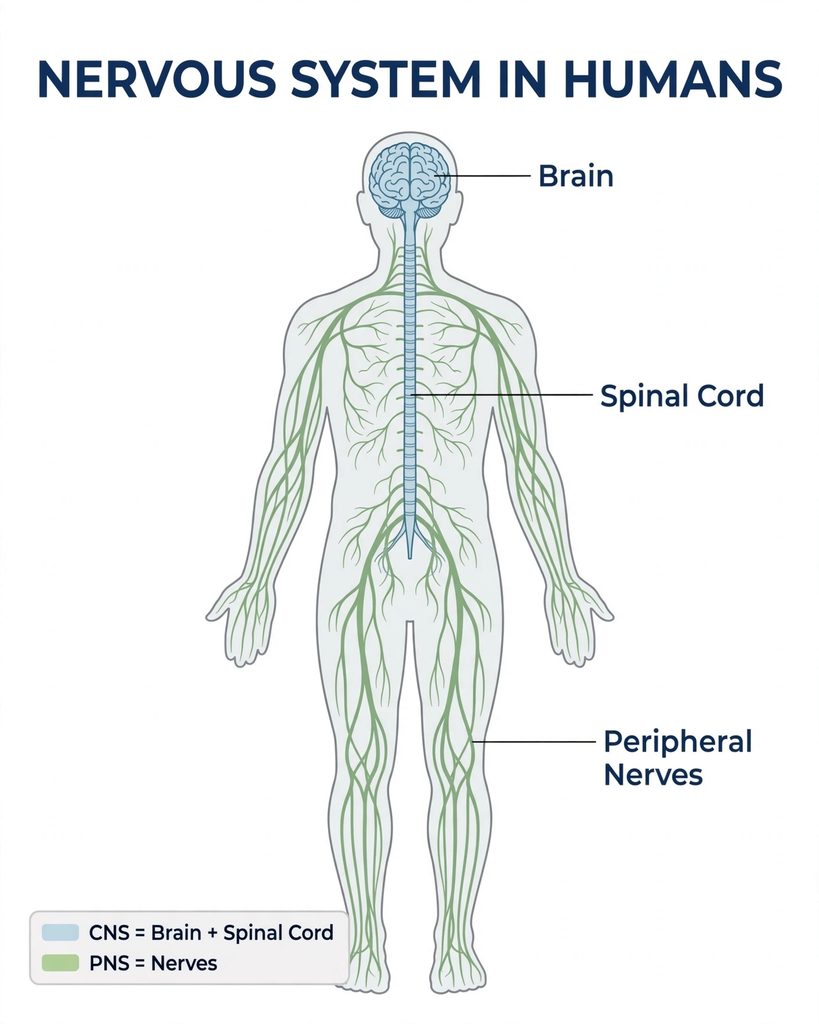
1. Central Nervous System (CNS)
The central nervous system is the control center of the body. It receives information, processes it, and sends out responses.
- Brain
The brain is the most important organ of the nervous system. It controls thinking, memory, emotions, and body actions. It also interprets information received from sense organs like the eyes, ears, and skin. - Spinal Cord
The spinal cord is a long tube-like structure that connects the brain to the rest of the body. It carries messages between the brain and body parts. It is also responsible for reflex actions, which are quick automatic responses.
2. Peripheral Nervous System (PNS)
The peripheral nervous system consists of all the nerves outside the brain and spinal cord. It connects the central nervous system to the rest of the body.
- Cranial Nerves – These are nerves that come from the brain and control activities in the head and neck.
- Spinal Nerves – These are nerves that come from the spinal cord and spread throughout the body.
The peripheral nervous system helps carry messages to and from the central nervous system.
Types of Nervous System Based on Function
The nervous system can also be divided based on how it works. Which is voluntary and involuntary nervous system.
1. Somatic Nervous System
This part controls voluntary actions. These are actions you decide to do, like walking, writing, or picking up an object. It controls skeletal muscles.
2. Autonomic Nervous System
This part controls involuntary actions. These are actions that happen automatically without thinking, like heartbeat, breathing, and digestion.
It has two parts:
- Sympathetic Nervous System
This prepares the body for action, especially during danger or stress. It increases heart rate and prepares the body to respond quickly. - Parasympathetic Nervous System
This helps the body to relax and return to normal after stress. It slows down the heart rate and supports digestion.
Structure of a Neuron
A neuron is the basic unit of the nervous system. It is a special cell that carries messages in the form of electrical signals.
A neuron has three main parts:
- Cell Body
This part contains the nucleus and controls the activities of the neuron. - Dendrites
These are branch-like structures that receive messages from other neurons and carry them to the cell body. - Axon
This is a long structure that carries messages away from the cell body to other neurons or muscles.
Neurons are connected to each other through junctions called synapses, where messages are passed from one neuron to another.
Functions of the Nervous System
The nervous system performs many important functions that keep the body working properly.
- Sensation
It helps the body detect changes in the environment, such as heat, cold, light, sound, and pain. - Integration
It processes and interprets the information received from the sense organs. - Response
It sends signals to muscles and glands to respond to the information. - Control of Body Activities
It controls both voluntary and involuntary actions in the body. - Coordination
It ensures that different parts of the body work together smoothly.
Reflex Action
A reflex action is a quick and automatic response to a stimulus without conscious thinking. It helps protect the body from harm.
For example, when you touch a hot object, your hand quickly pulls away before you even think about it.
Reflex actions are controlled by the spinal cord and follow a pathway called the reflex arc.
Differences Between Nervous System and Endocrine System
The nervous system and endocrine system both control activities in the body, but they do this in very different ways. The nervous system works by sending electrical signals through neurons. These signals move very fast, which is why actions like pulling your hand away from a hot object happen almost immediately. The effects of the nervous system are usually short-lasting because once the signal stops, the action also stops.
On the other hand, the endocrine system works by releasing hormones into the bloodstream. These hormones travel slowly compared to nerve signals, so the response takes more time. However, the effects of hormones last longer in the body. For example, hormones that control growth or puberty may affect the body over a long period of time.
Another difference is how specific their actions are. The nervous system targets specific muscles or glands for quick responses, while the endocrine system can affect many parts of the body at once because hormones move through the blood. Both systems are important and often work together to keep the body balanced and functioning properly.
Differences Between Nervous System and Endocrine System
| Feature | Nervous System | Endocrine System |
|---|---|---|
| Speed | Fast | Slow |
| Effect Duration | Short | Long |
| Signal Type | Electrical | Hormonal |
| Pathway | Nerves | Blood |
| Control | Immediate actions | Long-term processes |
Importance of the Nervous System in Humans
1. Control of body activities
The nervous system controls almost every activity in the body. It sends signals to muscles and organs, making it possible to perform actions like walking, talking, and even simple movements like blinking. Without this control, the body would not be able to function properly.
2. Response to environment
It helps the body detect and respond to changes in the environment. For example, when you touch something hot, the nervous system quickly sends signals that make you withdraw your hand. This helps to protect the body from harm.
3. Thinking and learning
The brain, which is part of the nervous system, allows humans to think, learn, and remember. It processes information and helps in decision-making. This function is very important for education and daily life activities.
4. Coordination of body parts
The nervous system ensures that different parts of the body work together smoothly. For example, when you walk, many muscles and joints must move in a coordinated way, and this is controlled by the nervous system.
5. Regulation of internal functions
It controls involuntary activities such as heartbeat, breathing, and digestion. These processes happen automatically, and the nervous system ensures they continue without conscious effort.
Problems of the Nervous System in Humans
- Injuries to brain and spinal cord
Damage to the brain or spinal cord can seriously affect the body. Such injuries may lead to loss of movement, loss of sensation, or difficulty in thinking and communication, depending on the area affected. - Diseases and infections
Certain diseases and infections can affect the nervous system by damaging nerve cells or interrupting signal transmission. This may cause symptoms like weakness, poor coordination, or inability to respond properly to stimuli. - Poor lifestyle habits
Habits such as lack of sleep, poor diet, and use of harmful substances like drugs and alcohol can weaken the nervous system. Over time, these habits may reduce brain function and affect how the body responds to signals. - Stress and mental strain
Long-term stress can affect how the nervous system functions. It may lead to problems like anxiety, poor concentration, and reduced ability to think clearly if not properly managed.
Care of the Nervous System
- Balanced diet
Eating healthy food that contains vitamins and minerals helps to keep the brain and nerves strong. Proper nutrition supports the growth and repair of nerve cells and improves overall function. - Adequate rest and sleep
The nervous system needs enough rest to function properly. Sleep allows the brain to relax, process information, and prepare for the next day. Lack of sleep can lead to tiredness and poor concentration. - Avoid harmful substances
Staying away from drugs, alcohol, and other harmful chemicals is important. These substances can damage nerve cells and interfere with the normal functioning of the nervous system. - Protection from injury
Protecting the head and spine is very important because they are delicate parts of the nervous system. Simple precautions like being careful during physical activities can help prevent serious damage. - Stress management
Managing stress through activities like exercise, relaxation, and proper planning helps keep the nervous system healthy. Reducing stress improves mental health and overall body function.
Summary
The nervous system in humans is a control system in the body that helps us sense, think, and respond to our environment. It is made up of the brain, spinal cord, and nerves, which work together to send and receive messages using special cells called neurons.
It is divided into the central nervous system (brain and spinal cord) and the peripheral nervous system (all other nerves). It can also be grouped into the somatic system for voluntary actions and the autonomic system for involuntary actions like heartbeat and digestion.
The nervous system in humans performs important functions such as detecting changes, processing information, and sending responses. It controls movement, supports thinking and memory, and keeps the body working in a coordinated way.
It is very important for survival, but it can be affected by injuries, diseases, and poor lifestyle habits. Taking care of it through proper diet, rest, and avoiding harmful substances helps it function well.
Revision Questions
- What is the nervous system and what are its main parts?
- Explain the functions of the brain and spinal cord.
- Describe the structure of a neuron.
- Differentiate between the central nervous system and peripheral nervous system.
- What is a reflex action and why is it important?
Frequently Asked Questions (FAQs)
1. What is the nervous system?
The nervous system is a network of cells and nerves that controls and coordinates all activities of the body. It helps the body respond to changes in the environment.
2. What are the main parts of the nervous system?
The main parts are the brain, spinal cord, and nerves. The brain and spinal cord form the central nervous system, while the nerves form the peripheral nervous system.
3. What is the function of the brain?
The brain controls thinking, memory, emotions, and body movements. It also processes information received from sense organs.
4. What is the role of the spinal cord?
The spinal cord carries messages between the brain and the rest of the body. It also controls reflex actions.
5. What is a neuron?
A neuron is a special cell that carries messages in the form of electrical signals within the nervous system.
6. What is the difference between voluntary and involuntary actions?
Voluntary actions are controlled consciously, like walking or writing, while involuntary actions happen automatically, like heartbeat and breathing.
7. How can the nervous system be kept healthy?
It can be kept healthy by eating well, getting enough sleep, avoiding harmful substances, managing stress, and protecting the body from injury.
Related Articles