Farm machinery and implements have changed the way many farming operations are carried out. In the past, farmers depended heavily on simple tools such as hoes, cutlasses and spades for clearing land, preparing the soil, planting and harvesting. These tools are still very useful, especially on small farms, but modern agriculture also makes use of machines that can perform heavy work over large areas in less time.
The use of farm machinery and implements helps farmers reduce physical effort, save time and carry out different farm operations more efficiently. Tractors can pull heavy implements, planters can place seeds at suitable spacing, sprayers can apply crop-protection products, and harvesters can gather mature crops quickly. However, not every farm needs large machinery. The right equipment depends on the size of the farm, the type of crop, the nature of the soil, available money, labour and the particular operation to be carried out.
About This Lesson
This lesson explains the meaning of farm machinery and farm implements, their differences, major types and uses. It also covers how machinery and implements are selected for different farm operations, their advantages and disadvantages, classification of farm implements, maintenance and safety precautions.
Learning Objectives
At the end of this lesson, you should be able to:
- explain the meaning of farm machinery;
- explain the meaning of farm implements;
- distinguish between farm machinery and farm implements;
- identify common types of farm machinery and their uses;
- classify farm implements according to how they are used or powered;
- explain the uses and importance of farm machinery and implements;
- state the advantages and disadvantages of using farm machinery;
- explain how farm machinery and implements should be maintained; and
- state important safety precautions when using farm equipment.
Meaning of Farm Machinery
Farm machinery refers to large or relatively complex machines used to perform agricultural operations. Many farm machines are powered by engines or other power sources and are designed to perform heavy work that would require a great deal of human effort if done manually. Tractors, combine harvesters, bulldozers, planters and some types of sprayers are examples of farm machinery.
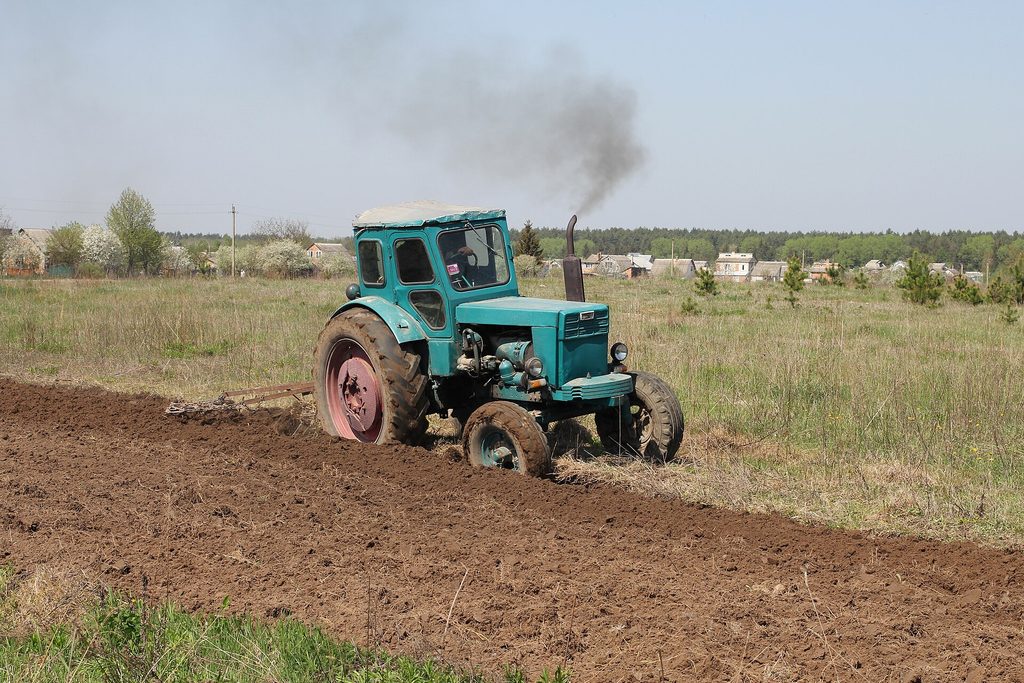
Farm machinery is particularly useful on medium-scale and large-scale farms because it can cover large areas and complete certain operations much faster than manual labour. A tractor, for example, can pull a plough or harrow across a field, while a combine harvester can carry out several harvesting operations on suitable grain crops. The use of machinery, however, involves costs such as purchase, fuel, maintenance and repairs, so farmers need to select machines according to their actual needs.
Meaning of Farm Implements
Farm implements are tools or pieces of equipment used to carry out specific agricultural operations. Some are operated by hand, while others are attached to or pulled by tractors and other sources of power. Examples of simple farm implements include hoes, cutlasses, rakes, spades and shovels, while tractor-mounted implements include ploughs, harrows and ridgers.
Farm implements are important on both small and large farms. A small-scale farmer may use a hoe and cutlass directly by hand, while a commercial farmer may attach a plough or harrow to a tractor. Therefore, farm implements are not limited to hand tools; the term can also include equipment designed to work with farm machinery.
Differences Between Farm Machinery and Farm Implements
Farm machinery and farm implements are closely related, but they are not exactly the same. Farm machinery is generally more complex and may have its own source of power, while many farm implements depend on a person, animal or machine to provide the force needed to operate them. A tractor is farm machinery because it is a powered machine that can perform work and pull other equipment, while a plough is a farm implement because it is attached to a tractor or another power source to carry out tillage.
| Farm Machinery | Farm Implements |
|---|---|
| Usually larger and more complex | Usually simpler equipment |
| Often has its own power source | May be operated by hand or attached to machinery |
| Examples: tractor, bulldozer, combine harvester | Examples: hoe, cutlass, plough, harrow |
| Commonly used for heavy or large-scale operations | Used for specific farm operations, from simple to tractor-assisted work |
Types of Farm Machinery
Farm machinery can be grouped according to the agricultural operation for which it is used. Some machines are designed for land preparation, while others are used for planting, fertilizer application, crop protection, harvesting or processing.
Land Preparation Machinery
Land preparation machinery is used to make farmland suitable for planting. Depending on the condition of the land, the operation may involve clearing vegetation, removing obstacles, loosening the soil, turning the soil or preparing a suitable seedbed.
Tractor: A tractor is one of the most important machines used in modern farming. It provides power for pulling and operating different implements such as ploughs, harrows, ridgers and trailers. Tractors are available in different sizes, so the appropriate type depends on the farm and the work to be performed.
Bulldozer: A bulldozer is a heavy machine fitted with a large blade at the front. It can be used for demanding land-clearing operations such as pushing soil, vegetation and certain obstacles. It is more suitable for heavy work than ordinary farm tools.
Planting Machinery
Planting machinery is used to place seeds or planting materials in the soil at suitable depths and spacing. Planters can place seeds in rows and at relatively uniform intervals, helping farmers cover large areas more quickly than manual planting. Different planters are designed for different crops, so the machine must match the crop and planting method.
Seed drills are another type of planting equipment. They are designed to place seeds continuously in rows at controlled spacing and depth. Such equipment is particularly useful where large areas need to be planted efficiently.
Fertilizer Application Machinery
Fertilizer application machinery is used to distribute fertilizer over farmland. A fertilizer broadcaster or spreader can distribute fertilizer across a field more quickly than applying it by hand. Proper calibration and correct application are important because too much fertilizer can waste money and may harm crops or the environment, while too little may not provide the nutrients crops need.
Crop Protection Machinery
Crop protection machinery is used to apply approved substances or other treatments that help control pests, diseases or weeds. Sprayers are common examples. They can be used to distribute suitable crop-protection products over crops or fields.
The type of sprayer selected depends on the size of the farm, the crop and the type of application required. Farmers should always follow the label directions for any agricultural product being applied and use appropriate protective equipment.
Harvesting Machinery
Harvesting machinery helps farmers collect mature crops efficiently and reduce the amount of manual work required. Different crops require different types of harvesting equipment.
Combine harvester: A combine harvester is a large machine designed for harvesting suitable grain crops. It can combine operations such as cutting, threshing and cleaning during the harvesting process. It is commonly associated with crops such as wheat and rice, depending on the machine and farming system.
Baler: A baler gathers loose materials such as hay or straw and compresses them into compact bales. The bales are easier to handle, transport and store.
Processing and Post-Harvest Machinery
Some machines are used after crops have been harvested to prepare agricultural produce for storage, sale or further processing. Examples include threshers, shellers, milling machines and grain-cleaning equipment. A thresher can separate grain from harvested plant material, while a sheller can remove kernels from crops such as maize.
Processing machines are particularly useful where large quantities of produce have to be handled. They reduce manual work and can make post-harvest operations faster and more efficient.
Types of Farm Implements and Their Uses
Farm implements are used for many activities, from clearing vegetation and preparing soil to transporting materials and carrying out tillage. Although many simple implements are operated by hand, some are designed to be pulled or mounted on tractors. Their usefulness depends on the particular farm operation and the conditions of the farm.
Cutting Implements
Cutting implements are used to cut grasses, weeds, small branches and other plant materials. The cutlass is one of the most widely used farm tools in Nigeria and is commonly used for clearing vegetation, cutting weeds and harvesting certain crops. A knife is more suitable for lighter cutting activities, such as harvesting vegetables and fruits or carrying out some pruning work.
Digging Implements
Digging implements are used to loosen soil, make planting holes, remove weeds and carry out other soil-related activities. The hoe is especially important in small-scale farming and can be used for weeding, making ridges, loosening soil and preparing planting areas. A spade is useful for digging, turning soil, making planting holes and mixing organic manure into the soil. A shovel is particularly useful for moving loose materials such as soil, sand, manure and compost.
Carrying Implements
Carrying implements help farmers move materials around the farm. A wheelbarrow can be used to transport harvested crops, manure, fertilizer, soil, tools and other materials. A head pan or basin may also be used to carry smaller loads such as soil, seeds and harvested produce, especially where motorized transport is not available.
Levelling Implements
A rake is used to smooth the soil surface, break smaller soil clods and remove stones, sticks, leaves and other unwanted materials. It can be particularly useful when preparing a nursery bed or a small planting area. Proper levelling helps produce a more suitable surface for planting and can make subsequent farm operations easier.
Tillage Implements
Tillage implements are used to prepare the soil before planting. A plough turns and loosens the soil and may help bury weeds and crop residues. It can be pulled by animals in some farming systems or attached to a tractor for mechanised farming.
A harrow is commonly used after ploughing to break larger soil clods and produce a finer soil surface. A ridger can be used to form ridges where the crop and farming system require them. These implements are important because the condition of the seedbed can affect planting and early crop establishment.
How Farm Machinery Is Selected for Different Farm Operations
The choice of farm machinery should be based on the work that needs to be done rather than simply on the availability of a particular machine. Farmers should consider the size of the farm, type of crop, soil condition, terrain, available labour, cost of the machine, fuel or power requirements, maintenance needs and the expected amount of work.
For land preparation, tractors may be used with ploughs, harrows and ridgers. The plough can turn the soil, while the harrow can break down larger clods and help prepare the seedbed. On land requiring heavy clearing, more specialised equipment may be necessary.
For planting, planters and seed drills can place seeds at suitable depths and spacing. They are particularly useful on larger farms because they can cover much more land in less time than manual planting. For fertilizer application, spreaders and other distributors can help farmers apply fertilizer more evenly when they are correctly adjusted.
For crop protection, appropriate sprayers and application equipment can be selected according to the crop and treatment required. For harvesting, the machine must match the crop because a machine suitable for grain harvesting may not be suitable for root crops, fruits or vegetables. After harvesting, threshers, shellers, milling machines and other processing equipment can be selected according to the type of produce being handled.
Choosing the right machine is therefore an important farm-management decision. A large machine may be useful on a large commercial farm but unnecessarily expensive for a small farm. Farmers should consider both the benefits and the total cost of owning, operating and maintaining the equipment.
Classification of Farm Implements
Farm implements can be classified according to how they are operated or the source of power used.
Hand tools: These are operated directly by people and are common in small-scale farming. Examples include hoes, cutlasses, rakes, spades and shovels.
Animal-drawn implements: These are pulled by animals such as oxen or donkeys. An animal-drawn plough is an example. They can be useful where tractors are not available or affordable.
Tractor-mounted or tractor-drawn implements: These are attached to or pulled by tractors. Examples include ploughs, harrows, ridgers and some types of planters. They allow tractors to perform a wider range of farm operations.
Uses and Importance of Farm Machinery and Implements
Farm machinery and implements are important because they make many agricultural operations easier and faster. They help farmers prepare land, plant crops, apply fertilizer, control weeds and pests, harvest produce, transport materials and carry out post-harvest processing. Without suitable equipment, many of these operations would require much more manual labour and time.
Another major benefit is that machinery allows farmers to cover larger areas within the available planting or harvesting period. This is particularly important in commercial agriculture, where delays in land preparation, planting or harvesting can affect production. Machinery can also reduce the physical effort required for demanding tasks such as ploughing and transporting heavy loads.
Farm equipment can also improve the consistency of certain operations. For example, properly adjusted planters can place seeds at more uniform spacing, while correctly calibrated fertilizer spreaders can distribute inputs more evenly. Harvesting and processing machines can also reduce the time required to handle large quantities of produce.
However, mechanisation does not mean that every farm operation must be carried out by a large machine. Simple implements remain useful and may be more suitable for small farms, difficult terrain or tasks that require careful manual handling. Good farming therefore involves choosing equipment that matches the operation and the resources available.
Advantages of Farm Machinery and Implements
One major advantage is saving time and labour. Machines can complete heavy operations much faster than manual labour, allowing farmers to prepare land, plant and harvest within the appropriate period. They also reduce the physical effort required for demanding tasks.
Farm machinery can also increase farm capacity and productivity. A farmer using suitable equipment can manage a larger area of land than would normally be possible with only hand tools. Machinery can also improve the efficiency of operations such as planting, harvesting and processing when properly selected and operated.
Another advantage is better use of labour. Instead of spending large amounts of time on heavy tasks, workers can concentrate on other farm activities that still require human attention. Machinery can also reduce the cost of labour for some operations, although this must be considered alongside the cost of buying, fuelling and maintaining the machine.
Disadvantages of Farm Machinery and Implements
The major disadvantage of large farm machinery is its high cost. Purchasing tractors, harvesters and other specialised equipment requires substantial capital. Farmers also have to consider fuel, spare parts, servicing, repairs and storage. These costs can make machinery difficult to afford for small-scale farmers.
Another problem is that machines require skilled operation and maintenance. Incorrect use can reduce the machine’s performance, cause breakdowns or damage crops and soil. When a machine breaks down during an important farming period, work may be delayed until it is repaired.
Heavy machinery can also cause soil compaction when used repeatedly or under unsuitable soil conditions. Compacted soil may have reduced pore space and poorer water movement, which can affect crop growth. In addition, excessive dependence on machinery can reduce the demand for some types of manual labour, although mechanisation can also create other jobs in machine operation, repair, maintenance and agricultural services.
Maintenance of Farm Machinery and Implements
Proper maintenance helps farm equipment work efficiently and remain useful for a longer period. After use, machinery and implements should be cleaned to remove soil, crop residues and other materials that can cause rust or damage. Moving parts should be lubricated where required, while nuts, bolts, tyres, belts and other important components should be checked regularly.
Farm machinery should be serviced according to the manufacturer’s recommendations, and faults should be repaired before they become more serious. Equipment should also be stored in a suitable dry and secure place where possible. Simple hand tools should be cleaned, dried and stored properly after use to prevent rust and damage.
Good maintenance reduces unnecessary breakdowns and can lower repair costs over time. It also helps farmers avoid delays during important periods such as planting and harvesting.
Safety Precautions When Using Farm Machinery and Implements
Farm machinery and implements should be handled carefully because some equipment contains sharp edges, moving parts or heavy components. Before operating a machine, the operator should inspect it and make sure it is in good working condition. Only people who have been properly trained to operate a particular machine should use it.
Appropriate protective clothing and equipment should be used where necessary. Loose clothing should be kept away from moving machinery, and people should not stand unnecessarily close to operating machines. A machine should be switched off before cleaning, adjusting or repairing it, and manufacturer’s safety instructions should be followed.
Children and untrained persons should be kept away from operating machinery. Farm tools should also be stored safely after use, with sharp implements placed where they cannot easily cause injury. Good safety practices protect farmers, workers and other people around the farm.
Conclusion
Farm machinery and implements are important parts of modern agriculture. Farm machinery such as tractors, planters, sprayers and harvesters helps farmers perform heavy and large-scale operations more quickly, while implements such as hoes, cutlasses, rakes, spades, ploughs and harrows are useful for a wide range of farm activities.
The choice of equipment should depend on the size of the farm, crop, soil, type of operation, available labour and the cost of purchasing and maintaining the equipment. Although machinery can save time, reduce physical effort and increase farm capacity, it also has disadvantages such as high cost, maintenance requirements and the possibility of soil compaction. Proper selection, maintenance and safe operation are therefore necessary to get the best results from farm machinery and implements.
Revision Questions
- What is farm machinery?
- What are farm implements?
- State four differences between farm machinery and farm implements.
- Mention five examples of farm machinery.
- State five examples of farm implements.
- Explain three types of farm machinery and give an example of each.
- Classify farm implements according to their source of power.
- State five uses or importance of farm machinery and implements.
- Mention four advantages and four disadvantages of farm machinery.
- State six safety precautions for using farm machinery and implements.
Frequently Asked Questions
What is farm machinery?
Farm machinery refers to large or relatively complex machines used to carry out agricultural operations. Examples include tractors, planters, sprayers and combine harvesters.
What are farm implements?
Farm implements are tools or equipment used to perform specific farm operations. They may be operated by hand or attached to a tractor or another source of power. Examples include hoes, cutlasses, ploughs and harrows.
What is the difference between a tractor and a plough?
A tractor is a powered farm machine that can perform work and provide power for other equipment. A plough is a farm implement that is commonly attached to or pulled by a tractor or another power source to turn the soil.
What is a combine harvester used for?
A combine harvester is used to harvest suitable grain crops and can carry out operations such as cutting, threshing and cleaning as part of the harvesting process.
Why are farm implements important?
Farm implements help farmers carry out activities such as cutting, digging, weeding, carrying, levelling and tilling the soil. They are especially useful where large machinery is unavailable or unsuitable.
Why is maintenance important for farm machinery?
Proper maintenance helps equipment remain in good working condition, reduces breakdowns and can extend its useful life. It also helps prevent unnecessary delays during important farm operations.
What are the disadvantages of farm machinery?
Some disadvantages include high purchase and maintenance costs, the need for skilled operators, fuel costs, machine breakdowns, possible soil compaction and reduced demand for some forms of manual labour.
What safety precautions should be followed when using farm machinery?
Machines should be operated by trained persons, inspected before use and switched off before cleaning or repairs. Appropriate protective equipment should be used, and children and untrained people should be kept away from operating machinery.
Related Articles