About This Lesson
Aquaculture and fish farming are important parts of modern agriculture because they provide fish and other aquatic products for food, income and employment. While fishing involves catching aquatic organisms from their natural environment, aquaculture involves deliberately breeding, rearing and managing aquatic organisms under controlled or managed conditions.
Fish farming is one of the most common forms of aquaculture. It can be carried out on a small or large scale using ponds, tanks, cages and other suitable systems. With proper planning, farmers can control feeding, water quality, stocking and harvesting to produce healthy fish for the market.
Learning Objectives
At the end of this lesson, you should be able to:
- define aquaculture and fish farming;
- explain the difference between aquaculture and fish farming;
- identify the major types of aquaculture;
- describe common fish farming systems and methods;
- mention common fish species raised by farmers;
- explain important factors to consider before starting a fish farm;
- describe basic fish farm management practices;
- state the importance, advantages and problems of aquaculture.
What Is Fish Farming?
Fish farming is the practice of raising fish under managed conditions such as ponds, tanks, cages, or other suitable systems. Farmers provide suitable water conditions, feed, and proper management to help the fish grow and remain healthy until they reach the desired size for sale or consumption.
Fish farming is one part of aquaculture. While aquaculture also includes the farming of other aquatic organisms such as shellfish, fish farming focuses specifically on the production of fish. Common farmed fish include catfish, tilapia, and carp, although the species raised depend on the region, climate, market demand, and farming system.
Difference Between Aquaculture and Fish Farming
| Aquaculture | Fish Farming |
|---|---|
| Covers the farming of different aquatic organisms | Specifically involves raising fish |
| May include fish, shellfish, crustaceans and aquatic plants | Mainly involves fish species |
| Has a wider scope | Is a branch of aquaculture |
| Can use ponds, tanks, cages, pens and other systems | Commonly uses ponds, tanks and cages |
Types of Aquaculture
Aquaculture can be classified according to the type of water environment in which production takes place.
1. Freshwater Aquaculture
Freshwater aquaculture is carried out in water with very low salt content. It is common in inland areas and may involve ponds, tanks, lakes and other suitable freshwater systems.
Catfish and tilapia are examples of fish commonly raised in freshwater systems. This type of aquaculture is particularly important in areas where freshwater resources are available.
2. Marine Aquaculture
Marine aquaculture involves raising aquatic organisms in saltwater environments such as seas and coastal areas. Species selected for this system must be able to survive and grow in marine conditions.
Marine aquaculture can involve fish, shellfish and other organisms. It usually requires suitable coastal conditions, specialised equipment and knowledge of marine farming.
3. Brackish Water Aquaculture
Brackish water aquaculture takes place in water containing a mixture of fresh and salt water. Such conditions occur naturally in areas such as estuaries and lagoons.
Species that can tolerate brackish conditions may be raised in these environments. The farmer must pay attention to salinity and other water-quality conditions because changes can affect the health and growth of the organisms.
4. Integrated Aquaculture
Integrated aquaculture combines fish production with another agricultural activity, such as crop or livestock production, so that resources can be used more efficiently.
For example, water or nutrients from one part of an integrated farm may be managed for use in another part of the system. Such systems require proper planning because materials introduced into fish production must not compromise fish health or water quality.
Fish Farming Systems
Fish farming systems can also be grouped according to the level of management and inputs used.
1. Extensive Fish Farming
In an extensive system, fish depend largely on naturally available food in the production environment. The farmer provides relatively low levels of supplementary inputs and management.
This system can be less expensive to operate, but production is usually lower because the farmer has less control over feeding and other conditions.
2. Semi-Intensive Fish Farming
A semi-intensive system combines natural food production with additional feed supplied by the farmer. The farmer exercises more control over stocking, feeding and water management than in an extensive system.
Production is generally higher than in an extensive system, although the farmer needs more inputs and management.
3. Intensive Fish Farming
An intensive system involves high levels of management and input. Fish are stocked at relatively high densities and depend heavily on supplied feed. Water quality, feeding, health and stocking levels require close monitoring.
Intensive systems can produce high yields from a relatively small area, but they require more capital, technical knowledge and careful management.
Common Methods of Fish Farming
1. Pond Culture
Pond culture involves raising fish in specially prepared ponds. The ponds may be earthen, concrete or constructed from other suitable materials.
The farmer prepares the pond, introduces healthy fingerlings, provides feed, monitors water quality and manages the fish until they are ready for harvest. Pond culture is widely used because it can be adapted to different farm sizes.
2. Tank Culture
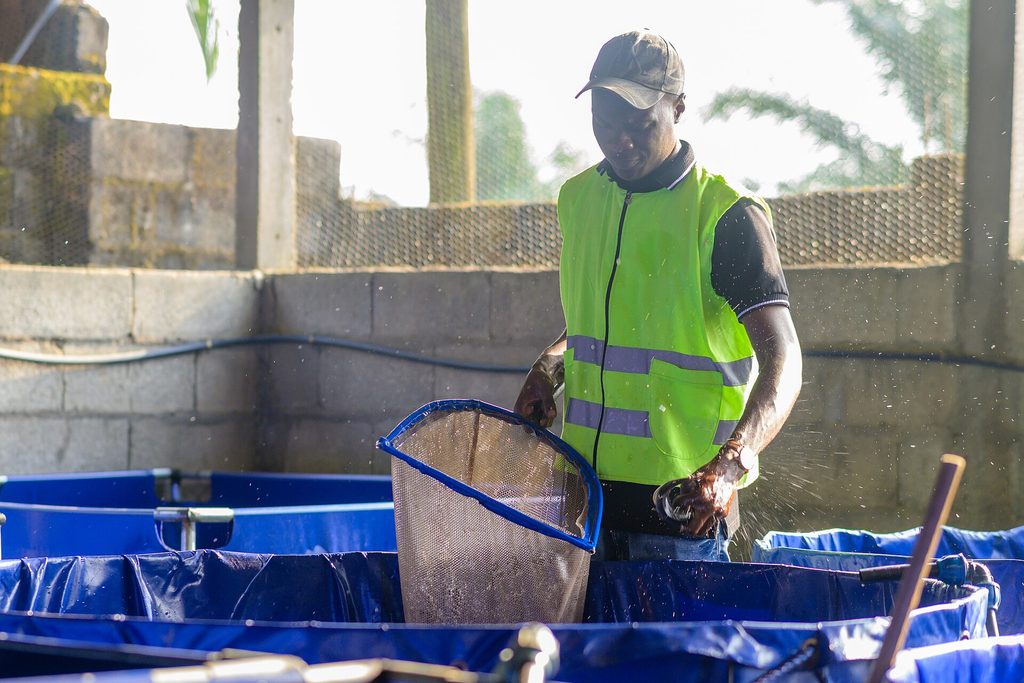
In tank culture, fish are raised in enclosed tanks made from materials such as concrete, plastic or fibreglass.
This method allows the farmer to have greater control over water quality, feeding and stocking. It can be useful where available land is limited, but it requires reliable water supply and proper waste management.
3. Cage Culture
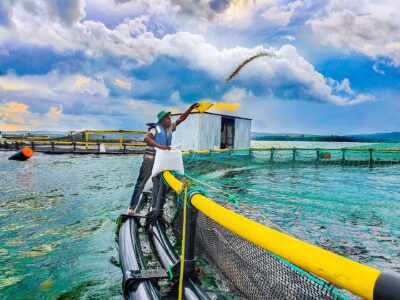
Cage culture involves keeping fish inside cages placed in suitable natural or artificial water bodies. Water flows through the cage while the fish remain enclosed.
The method can make use of existing water bodies, but the site must be carefully selected. Water quality, cage condition, stocking density and protection from predators or theft must be monitored.
4. Pen Culture
Pen culture involves enclosing a section of a natural water body with a structure that allows water to move through while keeping the fish within the selected area.
Unlike a floating cage, a pen is generally fixed or secured within the water body and makes use of the surrounding aquatic environment.
5. Recirculating Aquaculture System
A recirculating aquaculture system (RAS) is a modern fish production system in which water is treated and reused rather than continuously replaced with fresh water.
Water passes through filtration and treatment components before being returned to the fish tanks. RAS can support high production in limited space and reduce water use, but it requires reliable equipment, electricity, monitoring and technical knowledge.
Common Fish Species Used in Farming
Different fish species are selected according to climate, water conditions, growth rate, market demand and the farmer’s ability to manage them.
Catfish
Catfish is widely farmed in many parts of Nigeria and other countries. It is valued for its growth performance, adaptability and strong market demand. It can be raised in ponds and tanks when suitable water and feeding conditions are provided.
Tilapia
Tilapia is another important farmed fish. It grows well under suitable conditions and is widely consumed in many regions. Farmers need to manage breeding and stocking carefully because uncontrolled reproduction can result in too many small fish in some production systems.
Carp
Carp are widely farmed in several parts of the world. They can adapt to different pond conditions and may make use of naturally available food as well as supplementary feed.
Other species may also be farmed depending on the location, available technology, environmental conditions and market demand.
Factors to Consider Before Starting a Fish Farm
Starting a fish farm requires proper planning. A farmer should consider several factors before investing in the project.
Water supply: There should be a dependable source of suitable water. Water quality is essential because poor water conditions can cause stress, disease and fish mortality.
Capital: Money is needed for land preparation, pond or tank construction, fingerlings, feed, equipment, water supply and routine management.
Location: The site should be accessible and suitable for the proposed production system. Drainage, flooding risk and access to markets should also be considered.
Fish species: The selected species should be suitable for the local environment and have sufficient market demand.
Market: Farmers should know where and how the fish will be sold before production begins.
Technical knowledge: The farmer needs basic knowledge of feeding, stocking, water quality, disease prevention and harvesting.
Security: The farm should be protected against theft, predators and other avoidable losses.
Feeding and Nutrition in Fish Farming
Feed is one of the major inputs in fish farming because it provides nutrients needed for growth, development and maintenance.
Depending on the species and production system, fish may obtain some food naturally from the water while farmers provide additional feed. Commercial fish feeds are formulated to supply nutrients such as protein, fats, carbohydrates, vitamins and minerals.
The amount and type of feed should be appropriate for the species, size and number of fish. Overfeeding wastes money and can contribute to poor water quality because uneaten feed decomposes in the water.
Management Practices in Fish Farming
Good management is necessary for healthy fish and efficient production.
Proper feeding: Fish should receive suitable feed in appropriate quantities and at suitable times. Feeding should be monitored to reduce waste.
Water quality management: Important conditions such as temperature, dissolved oxygen and pH should be kept within suitable ranges for the species being farmed.
Stocking control: Fish should not be stocked beyond the capacity of the pond or tank. Overstocking can increase competition, stress, poor growth and water-quality problems.
Disease monitoring: Fish should be observed regularly for unusual behaviour, poor feeding, abnormal appearance or other signs of ill health. Early detection can help reduce losses.
Predator control: Nets, screens, fencing and other suitable measures can help protect fish from predators.
Pond and tank maintenance: Waste, excessive vegetation and other unwanted materials should be managed appropriately. Equipment should also be checked regularly.
Record keeping: Farmers should record important information such as the number of fingerlings stocked, feed used, mortality, growth, treatments and harvests. Good records help farmers monitor performance and make better decisions.
Steps Involved in Fish Farming
1. Site Selection
The farmer first selects a suitable location. The site should have access to adequate water and should be suitable for the proposed type of fish production.
2. Construction or Preparation of the Production Unit
Depending on the system, the farmer may construct a pond, install tanks or prepare cages. The structure should be suitable for the species and designed to reduce water loss and other problems.
3. Preparation of the Pond or Tank
Before stocking, the production unit should be cleaned and prepared. Water conditions should be checked and corrected where necessary.
4. Stocking of Fingerlings
Healthy fingerlings of suitable quality are introduced into the production system. Stocking should be done at an appropriate density to avoid overcrowding.
5. Feeding and Routine Management
The fish are fed appropriately while the farmer monitors growth, water quality and general health. Problems should be identified and addressed early.
6. Growth Monitoring
The farmer monitors the fish as they grow and keeps records of feeding, mortality, growth and other important observations.
7. Harvesting
Fish are harvested when they reach the desired size or when the farmer’s production plan requires it. Depending on the system, harvesting may involve nets, draining a pond or other suitable methods.
Importance of Aquaculture and Fish Farming
Aquaculture and fish farming contribute to food production by providing fish for human consumption. Fish is an important source of protein and other nutrients, making aquaculture useful in supporting food availability.
They also provide income and employment. People can earn money not only from raising fish but also from activities such as feed supply, fish processing, transportation, marketing and equipment services.
Fish farming can make use of available land and water resources. Production can take place in ponds, tanks and cages, allowing different farming systems to be used according to local conditions.
Aquaculture can also help reduce some pressure on wild fish populations when responsibly managed farmed fish provide part of the market supply. However, good environmental management is important because poorly managed aquaculture can itself create environmental problems.
Advantages of Aquaculture and Fish Farming
- It increases the supply of fish for food.
- It provides income and employment opportunities.
- Fish can be produced under controlled or managed conditions.
- Production can be carried out on different scales.
- Some systems can produce large quantities of fish from limited space.
- Farmers can monitor feeding, growth and water conditions.
- It can support local businesses involved in processing, transportation and marketing.
- Properly managed systems can make efficient use of available water and land resources.
Problems of Aquaculture and Fish Farming
High establishment and operating costs: Construction, fingerlings, feed, equipment, water supply and maintenance can require substantial investment.
Disease and parasites: Poor water quality, overcrowding and weak management can increase the risk of disease and parasite problems.
Water pollution: Uneaten feed, fish waste and other organic materials can reduce water quality if they are not properly managed.
Water supply problems: Fish require suitable water conditions, so shortages or poor-quality water can affect production.
Predators: Birds, snakes and other animals may eat fish or damage farm structures.
Theft: Fish farms may suffer losses through theft, especially when farms are not properly secured.
Technical challenges: Systems such as intensive tanks and RAS require knowledge and regular monitoring.
Market problems: Farmers may experience low prices, high transportation costs or difficulty finding buyers at the desired time.
Ways to Improve Fish Farming
Good planning and management can reduce many of the problems associated with fish farming.
Farmers should use healthy and suitable fingerlings, provide appropriate feed, maintain good water quality and avoid excessive stocking. Regular monitoring can help identify disease and other problems before they become severe.
Farmers should also keep proper production records and receive training in areas such as feeding, water management, fish health and business planning. Reliable water sources, suitable farm structures and proper security can further reduce losses.
Access to finance, farmer cooperatives, extension services and reliable markets can also help improve fish production and profitability.
Summary
Aquaculture is the breeding, rearing and management of aquatic organisms under controlled or managed conditions, while fish farming specifically involves raising fish. Fish farming is therefore one part of aquaculture.
Aquaculture may be carried out in freshwater, marine or brackish environments, while integrated systems combine fish production with other agricultural activities. Common fish farming systems include extensive, semi-intensive and intensive systems. Major production methods include pond culture, tank culture, cage culture, pen culture and recirculating aquaculture systems.
Successful fish farming requires suitable water, healthy fingerlings, appropriate feed, proper stocking, good water-quality management, disease monitoring and careful record keeping. Although the industry faces challenges such as high costs, disease, pollution, water shortages and theft, proper planning and management can improve production and reduce losses.
Revision Questions
- What is aquaculture, and how is it different from fish farming?
- Explain three types of aquaculture.
- Describe the extensive, semi-intensive and intensive fish farming systems.
- Mention five methods of fish farming and explain any three.
- State five factors that should be considered before starting a fish farm.
Frequently Asked Questions
1. What is aquaculture?
Aquaculture is the breeding, rearing and management of aquatic organisms under controlled or managed conditions.
2. What is fish farming?
Fish farming is the practice of raising, feeding and managing fish in ponds, tanks, cages or other suitable systems until they are ready for harvest.
3. What is the difference between aquaculture and fish farming?
Aquaculture has a wider scope and covers different aquatic organisms, while fish farming specifically deals with the production of fish.
4. What are common fish species used in farming?
Catfish, tilapia and carp are among the fish species commonly raised in aquaculture, depending on the region and production system.
5. What are the major problems of fish farming?
Major problems include high production costs, disease, poor water quality, water shortages, predators, theft and inadequate technical knowledge.
Related Articles
Pingback: Routine Management Practices in Farm Animals - EbisLearn
Pingback: Animal By-Products: Types, Uses and Importance - EbisLearn