Uses of An Axe
Safety Note: An axe has a sharp cutting edge and should be used only with proper instruction, appropriate protective equipment and adult supervision where required, especially during school practical activities.
About This Lesson
An axe is a hand tool used mainly for cutting, chopping and splitting wood. In agriculture, it can be useful during activities such as land preparation, farm maintenance, cutting branches and preparing wooden materials. Although many modern farms use machines for heavy cutting work, the axe remains useful for certain manual tasks where machinery is unavailable or unnecessary.
This lesson explains the meaning, parts, types, uses, maintenance and safety precautions of an axe. It also helps students to understand why choosing the right farm tool, keeping it in good condition and using it safely are important for effective agricultural work.
Learning Objectives
At the end of this lesson, you should be able to:
- explain what an axe is;
- identify the main parts of an axe;
- describe common types of axes;
- state the uses of an axe in agriculture;
- explain how to maintain an axe properly;
- state important safety precautions when using an axe;
- discuss the advantages and disadvantages of using an axe.
Meaning of an Axe
An axe is a hand tool consisting mainly of a metal head with a sharp cutting edge attached to a handle. It is designed to cut, chop or split wood and other suitable materials.
In agriculture, the axe is particularly useful for work involving trees, branches, logs and wooden materials. Its effectiveness depends on the condition of the blade, the strength of the handle and the way it is used.
Parts of an Axe
Knowing the parts of an axe makes it easier to understand how the tool works and how it should be maintained.
Axe Head:
The axe head is the heavy metal part attached to the handle. It contains the cutting edge and provides the weight needed for cutting.
Blade or Cutting Edge:
This is the sharpened edge of the axe. It makes contact with the wood and cuts through it.
Poll:
The poll is the back portion of the axe head, opposite the cutting edge. Its shape varies according to the type of axe.
Handle (Haft):
The handle, also called the haft, is the part held by the user. It provides control and allows force to be transferred to the axe head.
Wedge:
A wedge may be used to secure the axe head firmly to a wooden handle and help prevent the head from becoming loose.
Types of Axe
Different axes are designed for different types of work. Their shape, weight and cutting edge can vary according to their intended purpose.
1. Felling Axe
A felling axe is designed mainly for cutting or felling trees. Its cutting edge is suited to cutting across the fibres of wood.
2. Splitting Axe
A splitting axe is designed mainly for splitting logs and pieces of wood. Its head is shaped to help force the wood apart rather than simply cut through it.
3. Hand Axe
A hand axe is smaller and lighter than many full-sized axes. It is useful for lighter cutting tasks such as cutting small branches and preparing small pieces of wood.
4. Double-Bit Axe
A double-bit axe has two cutting edges on opposite sides of its head. The two edges may have different shapes or levels of sharpness depending on the design and intended use of the axe.
Uses of an Axe in Agriculture
The axe can perform several useful agricultural and farm-related tasks, particularly those involving trees and wood.
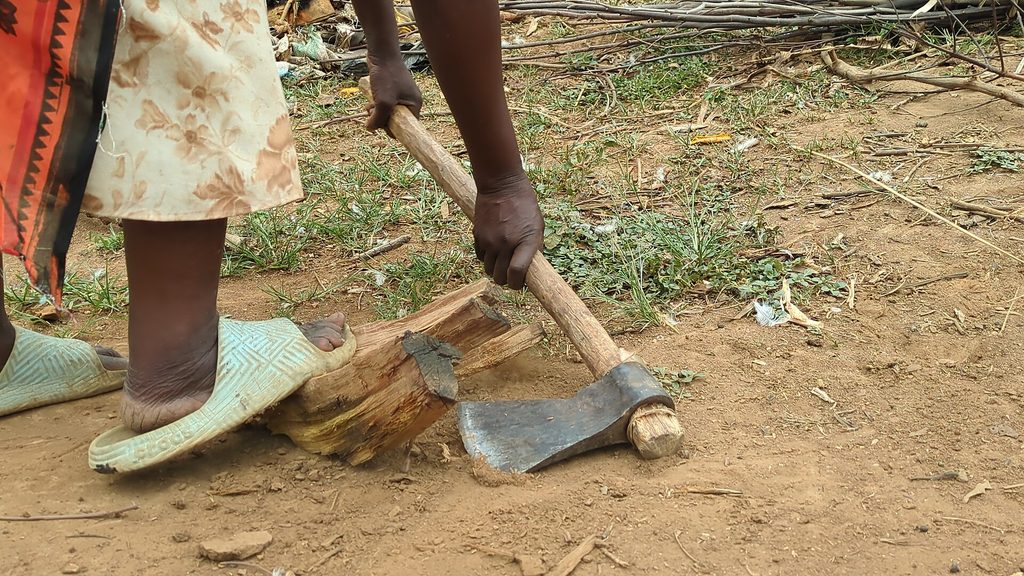
1. Cutting Small Trees
An axe can be used to cut suitable small trees when clearing land or carrying out other farm maintenance activities. Larger trees may require specialized equipment and appropriate professional methods.
2. Cutting Branches
An axe can be used to cut suitable thick branches that are difficult to remove with lighter hand tools. This may be useful when maintaining trees or clearing vegetation.
3. Splitting Firewood
An axe can be used to split suitable pieces of wood into smaller sections. This makes the wood easier to handle and prepare for its intended use.
4. Preparing Wooden Materials
Farmers may use an axe to cut or shape wood needed for simple farm structures and materials, such as stakes, posts and parts of fences.
5. Clearing Woody Vegetation
An axe can assist with clearing suitable woody vegetation and small trees from an area being prepared for agricultural use. It is not normally the only tool used for complete land clearing.
6. Removing Small Stumps and Woody Growth
An axe can be useful for cutting small woody growth close to the ground and working on small stumps. Larger stumps may require other tools or machinery.
7. Preparing Farm Structures
Wooden materials used in simple fences, animal shelters and other farm structures may need to be cut or shaped. An axe can assist with some of these tasks.
Maintenance of an Axe
Proper maintenance keeps an axe in good working condition and helps reduce problems during use.
Keep the blade clean:
Remove dirt, plant material and moisture from the metal parts after use. This helps keep the axe in good condition.
Keep the cutting edge in good condition:
The blade should be appropriately sharpened when necessary. A damaged or excessively blunt blade can make cutting more difficult.
Check the handle:
Inspect the handle regularly for cracks, excessive wear or looseness. A damaged handle should not be ignored.
Check the axe head:
Make sure the head remains securely attached to the handle. Do not use an axe if the head is dangerously loose or damaged.
Prevent rust:
Keep the metal parts dry and protect them from moisture. Where appropriate, a light protective oil can help protect metal surfaces from corrosion.
Store it safely:
Keep the axe in a dry, secure place when it is not being used. The cutting edge should be protected to prevent accidental contact.
Safety Precautions When Using an Axe
An axe has a sharp cutting edge and should always be treated as a potentially dangerous tool. Safe working habits are therefore important.
1. Inspect the axe before use.
Check that the head is securely attached and that the handle is in good condition.
2. Keep other people away from the working area.
Make sure there is enough clear space around you before using the axe. People should not stand close to the working area.
3. Use suitable protective equipment.
Appropriate protective footwear and eye protection can help reduce the risk of injury. Gloves may also be appropriate when they provide a secure grip without interfering with control of the tool.
4. Maintain a stable position.
Stand in a balanced position and maintain firm control of the axe. Avoid awkward positions that could make you lose control.
5. Keep the cutting area clear.
Remove unnecessary obstacles from the immediate work area before starting.
6. Use the correct axe for the task.
Different axe designs are made for different types of work. Using an unsuitable tool can make the task more difficult and increase the risk of accidents.
7. Carry and store the axe safely.
When the axe is not being used, protect the cutting edge and store the tool in a secure place.
Advantages of Using an Axe
1. It does not require fuel or electricity.
An axe is manually operated, so it does not need petrol, diesel or electrical power.
2. It is useful for several tasks.
Depending on its design, an axe can be used for suitable cutting, chopping and splitting activities.
3. It is portable.
An axe can easily be carried from one part of a farm to another.
4. It is relatively simple to maintain.
Routine cleaning, inspection, sharpening and proper storage can keep an axe useful for a long time.
5. It can be useful where machinery is unavailable.
For some small-scale or manual tasks, an axe can provide a practical alternative to powered equipment.
Disadvantages of Using an Axe
1. It requires physical effort.
Repeated use can be tiring, especially when dealing with large amounts of wood.
2. It can cause serious injury if misused.
The sharp cutting edge means that poor handling, damaged equipment or an unsafe working area can result in injury.
3. It is slower than many powered machines.
For large amounts of cutting, powered equipment can generally complete the work faster.
4. It is not suitable for every farm operation.
An axe is mainly designed for cutting and splitting suitable materials and cannot replace specialized agricultural machinery.
5. The cutting edge requires maintenance.
The blade may become blunt with use and needs appropriate sharpening to remain effective.
Comparison of Common Types of Axe
| Type | Common Use | Limitation |
|---|---|---|
| Felling Axe | Cutting suitable trees and wood | Not mainly designed for splitting logs |
| Splitting Axe | Splitting logs and pieces of wood | Not mainly designed for felling |
| Hand Axe | Small branches and light cutting work | Not suitable for heavy cutting |
| Double-Bit Axe | Cutting tasks requiring two cutting edges | Less suitable for tasks requiring specialized equipment |
Common Mistakes Students Should Avoid On The Uses of an Axe
- Saying that every axe is designed for cutting down large trees.
- Confusing a felling axe with a splitting axe.
- Ignoring the condition of the handle and axe head.
- Leaving an axe exposed to moisture after use.
- Listing uses without explaining how the tool is useful in each activity.
- Treating an axe as a replacement for all modern farm machinery.
Summary On The Uses of an Axe
An axe is an important hand tool used mainly for cutting, chopping and splitting wood. Its main parts include the head, cutting edge, poll, handle or haft and wedge. Common types include the felling axe, splitting axe, hand axe and double-bit axe.
In agriculture, an axe can be used for suitable tasks such as cutting small trees and branches, splitting wood, preparing wooden materials and clearing woody vegetation. Proper maintenance involves keeping the blade clean and in good condition, checking the handle and head regularly, protecting the metal from rust and storing the tool safely. Because an axe has a sharp cutting edge, careful handling, proper instruction and appropriate safety precautions are essential.
Revision Questions on the Uses of an Axe
- What is an axe, and what are its main uses in agriculture?
- Identify five main parts of an axe and state the function of each.
- Explain four common types of axe.
- State and explain five uses of an axe in agriculture.
- Describe the maintenance and safety precautions required when using an axe.
Frequently Asked Questions – Uses of an Axe
1. What is an axe used for in agriculture?
An axe is mainly used for cutting, chopping and splitting wood. It can also be useful for cutting branches, preparing wooden materials and clearing suitable woody vegetation.
2. What are the main parts of an axe?
The main parts include the axe head, cutting edge, poll, handle or haft and wedge.
3. What is the difference between a felling axe and a splitting axe?
A felling axe is designed mainly for cutting through wood, particularly when felling suitable trees, while a splitting axe is designed mainly to split logs and pieces of wood.
4. How should an axe be maintained?
The axe should be cleaned after use, kept in good condition, inspected for damage, protected from rust and stored safely. The handle and head should also be checked regularly.
5. Why is safety important when using an axe?
An axe has a sharp cutting edge and can cause serious injury if it is poorly maintained or improperly handled. A clear working area, sound equipment and safe working practices help reduce the risk of accidents.
Related Articles