Forests are important natural resources that provide timber, food, fuel, medicinal plants, wildlife habitats and raw materials for many industries. In agriculture, proper forest management helps to ensure that forest resources are used wisely while allowing forests to continue growing and producing useful resources for the future.
This lesson explains the meaning of forest, forestry and silviculture, common forest trees, forest reserves in Nigeria, the importance of forests and the major practices used in managing forest resources.
Table of Contents
- Meaning of Forest, Forestry and Silviculture
- Common Forest Trees
- Forest Reserves in Nigeria
- Importance or Uses of the Forest
- Management of the Forest
- Forest Regulations
- Selective Exploitation
- Deforestation
- Causes of Deforestation
- Regeneration
- Types of Regeneration
- Advantages of Natural Regeneration
- Afforestation
- Advantages of Afforestation
- Taungya System
- Conditions Necessary for the Practice of Taungya System
- Revision Questions
Meaning of Forest, Forestry and Silviculture
Forest
A forest can be defined as a large area of land covered with trees, bushes and other vegetation, either growing naturally or planted for specific purposes.
Forests may contain different species of trees, shrubs, grasses and other plants. They also provide habitats for many wild animals and other organisms. Forests are therefore important not only for the production of timber but also for maintaining the natural environment.
Forestry
Forestry is the study, establishment, protection and management of forests and forest resources. In other words, it is the art and science of planting, tending, managing and utilizing forests and their products.
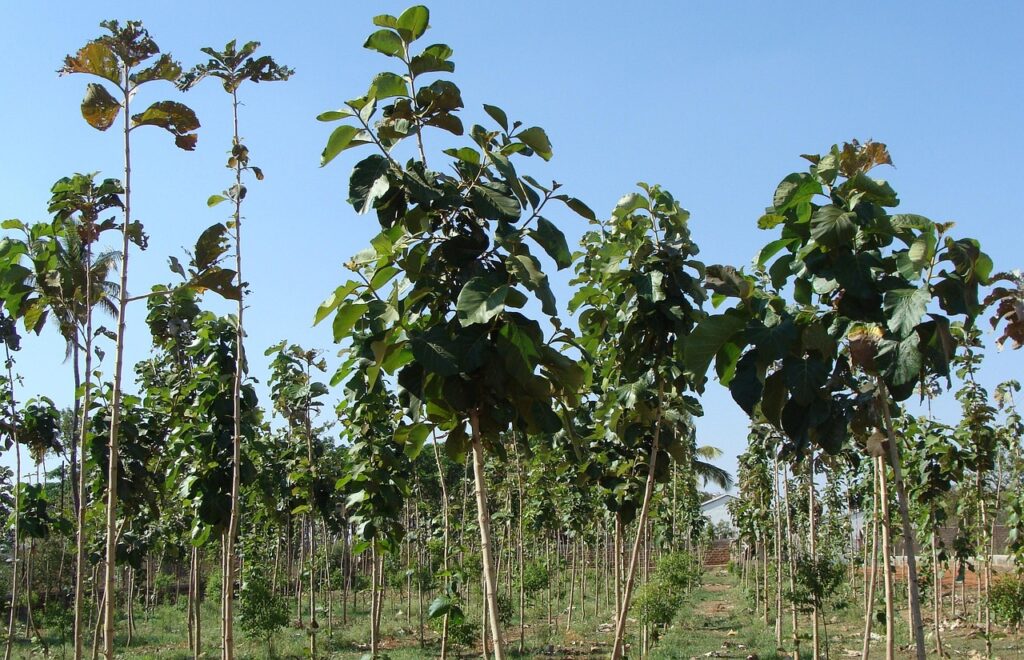
Forestry involves activities such as planting trees, protecting forest reserves, controlling forest fires, harvesting mature trees and replacing trees that have been removed. Proper forestry practices help to ensure a continuous supply of forest resources.
Silviculture
Silviculture is the study and practice of establishing, growing, tending and managing forest trees. It deals mainly with the cultivation and care of trees so that healthy and productive forests can be maintained.
Silviculture is therefore an important part of forestry because it helps in the establishment and proper management of forest trees.
Common Forest Trees
Common trees usually found in forests include:
- Iroko
- Obeche
- Mahogany
- Nigerian walnut
- Ebony
- Calabash wood
- Opepe
- Afara
- Teak
- Abura
These trees are useful for different purposes. Some provide valuable timber for construction and furniture, while others may provide materials used in industries and other economic activities.
Forest Reserves in Nigeria
Meaning of Forest Reserve
A forest reserve is a large area of land where plants and other forest resources, whether growing naturally or planted, are specially protected and preserved by the government for specific purposes.
Forest reserves help to protect important forest resources from uncontrolled exploitation. They can also provide areas where trees and wildlife can be conserved and where forestry activities can be properly managed.
Some forest reserves in Nigeria include:
- Mamu River Forest Reserve in Anambra State.
- Omo Forest Reserve in Ogun State.
- Afi River Forest Reserve in Cross River State.
- Okomu Forest Reserve in Edo State.
- Anara Forest Reserve in Kaduna State.
- Shasha River Forest Reserve in Ogun State.
- Sakpoba Forest Reserve in Edo State.
- Zamfara Forest Reserve in Zamfara State.
- Sanga River Forest Reserve in Plateau State.
- Awba Hills Forest Reserve in Oyo State.
Importance or Uses of the Forest
Forests are important natural resources and provide many benefits to people, agriculture, industries and the environment. Government and communities therefore need to encourage the protection and planting of trees.
The importance and uses of forests include the following:
1. Provision of Food
Forests provide different types of food such as fruits, nuts, seeds, mushrooms and other edible products. Some communities also depend on forest resources as sources of food and income.
2. Provision of Fuel
Wood obtained from forests can be used as fuel for cooking and other domestic purposes. Firewood and charcoal are important sources of energy for many households.
3. Provision of Medicinal Herbs
Many forest plants are sources of medicinal products. Leaves, roots, bark, seeds and other plant parts may be used in traditional medicine and may also provide materials for pharmaceutical research.
4. Provision of Employment
Forestry provides employment opportunities in activities such as tree planting, logging, timber processing, furniture making, forest management and the transportation of forest products.
5. Forest Serves as a Windbreak
Trees help to reduce the speed of strong winds. Forest vegetation can therefore protect farms, buildings and soil from the damaging effects of wind.
6. Formation of Rainfall
Forests play an important role in the water cycle. Trees release water vapour into the atmosphere through transpiration, which contributes to atmospheric moisture and can influence rainfall patterns.
7. Prevention of Soil Erosion
The leaves and branches of trees reduce the direct impact of rainfall on the soil, while tree roots help to hold soil particles together. Forests therefore help to reduce soil erosion.
8. Addition of Nutrients to the Soil
Fallen leaves, branches and other plant materials decompose and add organic matter and nutrients to the soil. This can improve soil structure and fertility.
9. Home of Wild Animals
Forests provide shelter, food and breeding areas for many wild animals, birds, insects and other organisms. They therefore serve as important habitats for wildlife.
10. Forests Serve as Tourist Centres
Forests and forest reserves can attract tourists because of their natural scenery, wildlife and other features. This can provide income for local communities and government.
11. Provision of Foreign Exchange
Forest products such as timber and other valuable forest resources can be exported to other countries. Their export can generate foreign exchange for a country.
12. Provision of Timber
Forests provide timber used for building construction, furniture, doors, roofing materials and other purposes. Timber is also an important raw material for several industries.
13. Provision of Pulp
Wood pulp obtained from trees is used in the manufacture of paper, cardboard and other paper products.
14. Beautification of the Environment
Trees and other forest vegetation improve the appearance of the environment. They can provide shade and make residential, agricultural and recreational areas more attractive.
15. Reduction of Atmospheric Pollution
Trees can help improve air quality by absorbing carbon dioxide and trapping some pollutants and dust particles. They also release oxygen during photosynthesis.
16. Provision of Raw Materials
Forests provide raw materials used by industries. Timber, wood pulp, medicinal plants, fibres and other forest products can be processed into useful goods.
Management of the Forest
Forest management involves the careful use, protection, development and conservation of forest resources to ensure that they remain available for present and future generations.
In order to ensure a continuous supply of timber and other forest resources, the following management practices are adopted:
- Forest regulations
- Selective exploitation
- Deforestation
- Regeneration
- Afforestation
- Taungya system
Forest Regulations
Forest regulations are laws and rules made by the government to control the exploitation and use of forest resources. They are intended to prevent indiscriminate cutting, destruction and uncontrolled exploitation of forests.
These regulations help to ensure the preservation and sustainable use of forest resources.
Forest regulations in Nigeria include:
- Prohibition of bush burning.
- Ban on indiscriminate cutting of timber trees.
- Encouraging people to plant trees.
- Ban on indiscriminate collection of leaves and firewood from protected forests.
- Ban on farming in forest reserves.
- Requiring people to obtain licences before cutting trees for approved purposes.
Where licences are issued for tree felling, the quantity of trees to be felled should be controlled. The number and condition of forest stands should be assessed before trees are removed.
Proper enforcement of forest regulations is important because laws alone cannot protect forests if illegal logging and uncontrolled exploitation are allowed to continue.
Selective Exploitation
Selective exploitation is the process of cutting or harvesting only mature trees from a forest while leaving younger and immature trees to continue growing.
It is a method of forest management in which certain trees are selected for harvesting according to criteria such as maturity, size and species. The system allows older trees to be harvested while younger trees remain in the forest to provide continued vegetation cover and future timber.
Selective exploitation should be properly controlled to prevent unnecessary damage to the forest.
Advantages of Selective Exploitation
1. It ensures the concentration of selected species of timber in the forest.
Only trees that meet the required conditions are selected for harvesting. This helps forestry authorities manage desirable timber species.
2. It protects the soil from erosion.
Since younger trees and other vegetation remain in the forest, the soil continues to receive protection from rainfall and wind.
3. It ensures a continuous supply of timber.
Mature trees can be harvested while younger trees are left to grow. This makes it possible to obtain timber at different periods rather than clearing the entire forest at once.
4. It serves as a revenue base for the government.
The government can generate revenue through licences, permits and other approved forestry activities.
5. It helps to prevent indiscriminate felling of timber.
By giving licences to approved sawmillers and controlling the trees that can be harvested, the state forestry authorities can reduce uncontrolled tree cutting.
6. It helps prevent illegal felling and farming.
Forest guards and other forestry officials can monitor forest reserves and help prevent illegal activities such as unauthorized tree cutting and farming.
7. Undesirable species of timber can be eliminated.
Selective management can be used to remove certain undesirable or unwanted tree species while encouraging the growth of more useful species.
Deforestation in Forest Management
Deforestation is the continuous removal of forest stands or trees through activities such as bush burning, indiscriminate felling and clearing without adequate replacement or regeneration.
Deforestation becomes a serious problem when trees are removed faster than they can naturally regenerate or be replaced. It can result in soil erosion, loss of wildlife habitats, reduced soil fertility and other environmental problems.
Causes of Deforestation
The major causes of deforestation include:
- Unfavourable climate factors
- Man’s farming activities
- Timber exploitation
- Mining and industrialization
- Natural disasters
- Government policies
These causes can act separately or together. For example, forests may first be cleared for farming and later subjected to timber exploitation or settlement development.
Regeneration in Forest Management
Regeneration is the process by which a forest grows again after it has been exploited or damaged.
It may involve the deliberate restoration of a forested area after trees have been harvested. Regeneration is important because it helps to replace trees that have been removed and maintain the productivity of the forest.
Regeneration can occur through the regrowth of trees from old stumps or through the deliberate planting of new forest seedlings in a deforested area. It may be natural or artificial.
Types of Regeneration
There are two main types of regeneration:
Natural Regeneration
In natural regeneration, new trees and other plants grow naturally from old stumps, seeds or naturally occurring seedlings.
Under favourable environmental conditions, new trees or volunteer trees can develop from existing forest vegetation. This method makes use of the forest’s natural ability to recover after exploitation.
Artificial Regeneration
Artificial regeneration involves the deliberate planting of new forest seedlings in a deforested or exploited area.
In this method, forest trees are established deliberately in a plantation or other selected area. The seedlings are planted and managed until they become established trees.
Advantages of Natural Regeneration
Natural regeneration has several advantages, including:
1. It is less expensive than artificial regeneration.
It makes use of naturally occurring seedlings and regrowth, so fewer resources may be required for establishing the forest.
2. It does not require the former stages of plantation establishment.
Since new trees develop naturally, activities such as raising seedlings in a nursery and transporting them to the forest may not always be necessary.
3. It helps stabilize the natural ecosystem.
Natural regeneration allows plant species that are already adapted to the local environment to grow again. This can help restore the natural conditions of the area.
4. It does not require special management skills.
Once favourable conditions exist, natural regrowth can occur without the level of direct intervention that may be required in artificial plantation establishment.
Afforestation In Forest Management
Afforestation is the process of establishing a forest or tree plantation in an area that was not previously covered by forest or where natural forest vegetation has been removed.
It involves planting and managing new forest species in a selected area. Afforestation is commonly associated with tree-planting programmes aimed at increasing forest cover and improving the environment.
In Nigeria, tree planting campaigns are encouraged as part of efforts to increase tree cover and replace trees that have been removed. The original practice described in this lesson recommends planting two tree seedlings to replace one harvested tree.
Early stages of afforestation may include the Taungya system, which involves growing trees and arable crops on the same piece of land. This can help to maximize land use while the newly planted forest trees are still young.
Advantages of Afforestation
Afforestation has many advantages, which include the following:
1. It adds organic matter to the soil and can increase soil fertility.
Leaves, roots and other plant materials eventually decompose and add organic matter to the soil.
2. It provides a regular supply of raw materials for industries.
Forest plantations can provide timber and other materials needed by industries.
3. It helps prevent desert encroachment.
Planting trees helps provide vegetation cover and can reduce the exposure of soil to wind erosion, particularly in areas vulnerable to desertification.
4. It increases forest fauna and wildlife.
As trees become established, they can provide food and shelter for birds, insects and other wildlife.
5. It helps build up the microclimate and cool the environment.
Trees provide shade and release water vapour through transpiration. This can help moderate temperatures in the surrounding area.
6. It helps prevent the leaching of plant nutrients.
A good cover of vegetation helps protect the soil and allows plant roots to take up nutrients and water.
7. It increases soil moisture retention.
Tree cover reduces direct exposure of the soil to heat and can help the soil retain moisture.
8. It can increase the amount of rainfall in the area.
Trees contribute moisture to the atmosphere through transpiration and can influence local water-cycle processes.
9. It helps to build up the soil.
The addition of leaves, roots and other organic materials helps improve soil structure and contributes to the formation of organic matter.
Taungya System
The Taungya system is a system of forest management that involves planting arable crops at the early stages of forest establishment. The food crops are harvested before the forest trees develop a closed canopy.
In this system, food crops and forest trees are planted on the same piece of land. Farmers are able to cultivate crops while the young trees are becoming established. As the trees grow and their canopy becomes dense, cultivation of the arable crops becomes difficult, and the area gradually develops into a forest plantation.
The Taungya system therefore involves the integration of agriculture with forestry. It can help to make productive use of land during the early stages of forest establishment.
Conditions Necessary for the Practice of Taungya System
The conditions that may encourage the practice of the Taungya system include:
- Scarcity of land
- Over-population
- Unemployment
- Government policies
- Low standard of living
- Granting of incentives
Where agricultural land is limited and there is a need to combine food production with tree planting, the Taungya system can provide an opportunity for both activities to take place on the same land during the early stages of forest establishment.
Revision Questions on Forest Management in Agriculture
- Define forest and list 10 uses of the forest and its resources.
- Briefly discuss the management of forests.
- Write short notes on the following:
- (a) Selective exploitation
- (b) Regeneration
- (c) Afforestation
- (a) Describe briefly five management methods adopted in forest areas to ensure continuous timber supply.
(b) Enumerate six benefits derived from forestry. - Define Taungya system.
- Define afforestation.
- Discuss briefly the causes of deforestation.
- Write short notes on the following:
- (a) Regeneration
- (b) Selective exploitation