1 Performance Objectives
- Explain the meaning of subsistence and commercial agriculture.
- Enumerate the characteristics of subsistence and commercial agriculture.
2 Subsistence Agriculture
Definition: Subsistence agriculture is farming mainly carried out by a farmer to produce food for himself and his family.
Characteristics of Subsistence Agriculture
- Mostly practised by peasant farmers.
- Involves small portions of land.
- Makes use of crude tools such as hoes and machetes.
- There is no specialization.
- Uses mainly unskilled labour.
- Returns or output are usually very low.
- Usually involves family labour.
- Provides mainly the basic needs of the family.
- There is little or no surplus for sale.
- Involves little or low capital.
- Relies heavily on natural rainfall.
- Mainly involves production of food crops.
- Makes limited use of agrochemicals such as insecticides and pesticides.
- Uses unimproved crop varieties and animal breeds.
- Mixed cropping is usually practised.
Problems of Subsistence Agriculture
- Unreliable Family Labour Supply — Rural-urban migration of able-bodied people can reduce the availability of family labour, particularly children who would otherwise work on the farm.
- Use of Crude Tools — Crude tools limit farm production when compared with tractors, ploughs, harrows and other modern equipment.
- Fragmented or Small Farmland — Small farm holdings can greatly limit the amount of production.
- Illiteracy of Farmers — Limited formal education can make it difficult for farmers to read written instructions and adopt modern farming techniques.
Characteristics of Subsistence Agriculture
- No Surplus for Sale: Production is often just enough for the farmer’s family and may not generate enough surplus for sale.
- Little Capital Investment: Only a small amount of money is usually invested in the farm, which limits the farmer’s ability to obtain necessary inputs.
- Level of Specialization: Subsistence farmers commonly engage in mixed production rather than concentrating on one particular agricultural enterprise.
- Controlled Diseases: Because of poverty and limited resources, diseases and pests may not be adequately controlled, which can lead to further losses.
- Low Return/Yield: The small size of farms and the limited inputs used usually result in low returns from subsistence agriculture.
3. COMMERCIAL AGRICULTURE
Definition: Commercial agriculture is the type of agriculture concerned mainly with producing food, animals and cash crops on a large scale for sale.
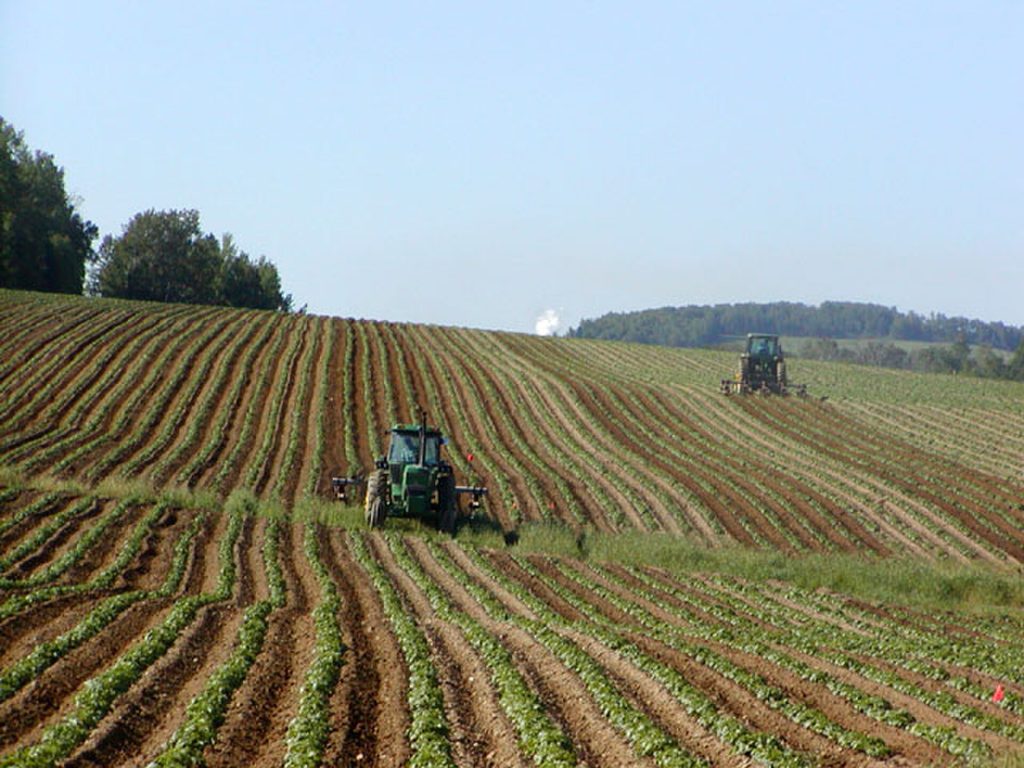
Characteristics of Commercial Agriculture
- It is usually practised by large-scale farmers.
- It involves the cultivation of large areas of land.
- It requires a high level of capital investment.
- It involves the use of skilled labour.
- Mechanization of agricultural operations is common.
- It involves the use of improved varieties of crops and breeds of animals.
- Commercial farmers may engage in specialization.
- Improved varieties of crops and breeds of animals may be used.
- Irrigation systems may be used to support production.
- The use of agrochemicals such as fertilizers, herbicides, insecticides and pesticides is common.
Advantages of Commercial Agriculture
- Large Output: Large-scale farming can produce a high quantity of agricultural products.
- Use of Improved Technology: Modern equipment and improved farming methods can increase production and yield.
- Specialization of Labour: Commercial farming allows workers to specialize in particular agricultural activities.
- Encouragement of Research: Research can be encouraged to improve farming methods and agricultural production.
- Provision of Cheap Products: Large-scale production can make agricultural products available at relatively lower prices.
- Provision of Cheap Products: It can provide large quantities of livestock and other agricultural products for sale.
- Provision of Quality Products: Commercial agriculture can produce agricultural products of good quality.
- Higher Skilled Manpower: It creates demand for trained and skilled agricultural workers.
Problems/Disadvantages of Commercial Agriculture
- Inadequate Supply of Farm Inputs: Shortages of necessary inputs can affect production.
- Unfavourable Land Tenure System: Difficult land ownership and tenure arrangements can discourage commercial farming.
- High Capital Investment: Commercial farming requires a large amount of money for land, equipment and other inputs.
- Inadequate Marketing Channels: Poor marketing arrangements can make it difficult for farmers to sell their products.
- Inadequate Technical Know-how: Lack of technical knowledge can affect farm operations and maintenance.
- High Cost of Spare Parts: Maintaining farm machinery can be expensive when spare parts are costly or difficult to obtain.
- Inadequate Processing Facilities: Lack of processing facilities can lead to losses after agricultural products are harvested.
- Inadequate Skilled Manpower: A shortage of trained agricultural workers can affect production.
- Inadequate Credit Facilities: Limited access to affordable credit can make commercial farming difficult.
- Inadequate Storage and Processing Facilities: Poor storage and processing arrangements can result in losses.
- Improper Application of Farm Inputs: Incorrect use of fertilizers, herbicides and other inputs can cause problems.
- Displacement of Small-Scale Farmers: Commercial farming may take over land previously used by small-scale farmers.
- Unfavourable Government Policies: Government policies may sometimes make commercial agriculture difficult.
- Land Erosion: Poor agricultural practices can contribute to soil erosion.
DIFFERENCES BETWEEN SUBSISTENCE AGRICULTURE AND COMMERCIAL AGRICULTURE
| SUBSISTENCE AGRICULTURE | COMMERCIAL AGRICULTURE |
|---|---|
| A small area of land is cultivated. | A large area of land is cultivated and mechanised. |
| Produce is mainly for family consumption. | Produce is mainly for sale or export. |
| Crude tools and implements are used. | Complex and modern tools and implements are used. |
| Family/unskilled or manual labour is usually employed. | Paid/skilled labour is usually employed. |
| Yields or returns are low. | Yields or returns are high. |
| It requires little capital investment. | It requires huge capital investment. |
| It does not require any special marketing strategies. | It requires special marketing strategies. |
| Pests and diseases are not controlled. | Pests and diseases are usually controlled. |
| It requires little or no formal education to operate. | It requires special skills and technical education/labour. |
| No need for storage and processing facilities. | Storage and processing facilities are required. |
| Mostly practised by peasant farmers. | Mostly practised by very rich farmers/companies. |
| Usually leaves the environment free of pollution. | It may cause environmental pollution. |
| Low environmental degradation. | High environmental degradation. |
| Farming operations are usually accomplished with minimum application of agro-chemicals such as pesticides, herbicides and fertilizers. | Farming operations are usually accomplished with applications of agro-chemicals. |
| Mixed cropping system is usually practised. | Mono-cropping system is usually practised. |
| Farm records are rarely kept. | Farm records are kept. |
| There is usually no specialization. | Farmers usually specialize in crops or animal production. |
REVISION QUESTIONS
(1)(a) Write short notes on:
(i) Subsistence farming
(ii) Commercial Agriculture.
(b) List four problems associated with each of the following:
(i) Subsistence Farming
(ii) Commercial Agriculture (SSCE Nov. 1993).
(2)(a) List six relationships between Agriculture and Industries.
(b) Explain six factors affecting the success of commercial agriculture in Nigeria (SSCE June 1996).
(3)(a) In a tabular form, state six differences between subsistence and commercial agriculture.
(b) Mention two industries that use each of the following agricultural produce as raw materials:
(i) cotton seed
(ii) groundnut seed
(iii) coffee seed
(iv) palm kernel. (SSCE Nov. 1996).
(4) State five differences between commercial agriculture and subsistence agriculture. (WASSCE June, 2008).
(5) State four problems of commercial agriculture in West Africa. (WASSCE June, 2010).
(6)(a) State four problems of commercial agriculture in West Africa. (WASSCE June, 2010).
(b) Explain six factors affecting the success of commercial agriculture in Nigeria.